Here's the thing about anxiety and arousal
Your brain can shut down desire in about 3 seconds flat. Not your body. Your brain. And when that happens, no amount of physical touch is going to unlock anything because the gate is already closed at the mental level.
I see this constantly with clients in mid-life relationships. They show up wanting to reconnect intimately, and the conversation starts with something like, "I just can't get turned on anymore," or "My body doesn't work the way it used to." But when we dig into it, the real culprit isn't biology. It's anxiety. Rumination about performance. Worry about time. Stress about whether their partner finds them attractive. Racing thoughts about tomorrow's work problems. The physical sensation is there, but the mental permission slip never arrives.
Anxiety creates what I call a "pleasure ceiling." Your body can go from zero to maybe 30 percent arousal, but that's where it stalls. The deeper levels stay locked.
Why anxiety blocks arousal differently than other obstacles
When your body is numb from medication or hormonal shifts, the pathway is still open. Your nervous system is ready to receive pleasure; the sensations just aren't loud enough. You can work with that.
When anxiety is the barrier, it's different. Your nervous system is in a heightened state. You're in low-level fight-or-flight. Your vagus nerve isn't relaxed; it's on alert. And in that state, your body literally cannot access the parasympathetic response (the "rest and digest" mode) that pleasure requires. You're running a security system instead of a party.
The anxious brain does something particularly cruel: it creates a feedback loop. You notice you're not aroused. You panic about not being aroused. The panic makes arousal even harder. Now you're anxious about being anxious, and your body pulls further away.
Recognizing when anxiety is the actual problem
Three signs that you're dealing with mental blocks rather than physical ones:
First sign: Arousal vanishes the moment you think about it. You can be having a perfectly fine moment with your partner or alone, and then your brain whispers, "Are you getting turned on yet?" And just like that, gone. The awareness of the absence kills the presence.
Second sign: Your body responds to novelty but then crashes. New partner, new toy, new location. Initially exciting. Then within weeks, the anxiety creeps back in and flattens everything again.
Third sign: Your arousal is contextual in a very specific way. You can get turned on in certain situations (late at night, when your partner initiates first, when you're traveling) but not others (weekday mornings, when you initiate, when you're home stressed about bills). The difference isn't about your body's capacity. It's about how safe your brain feels.
The nervous system reset: why lemon vibrators work differently when anxiety is present
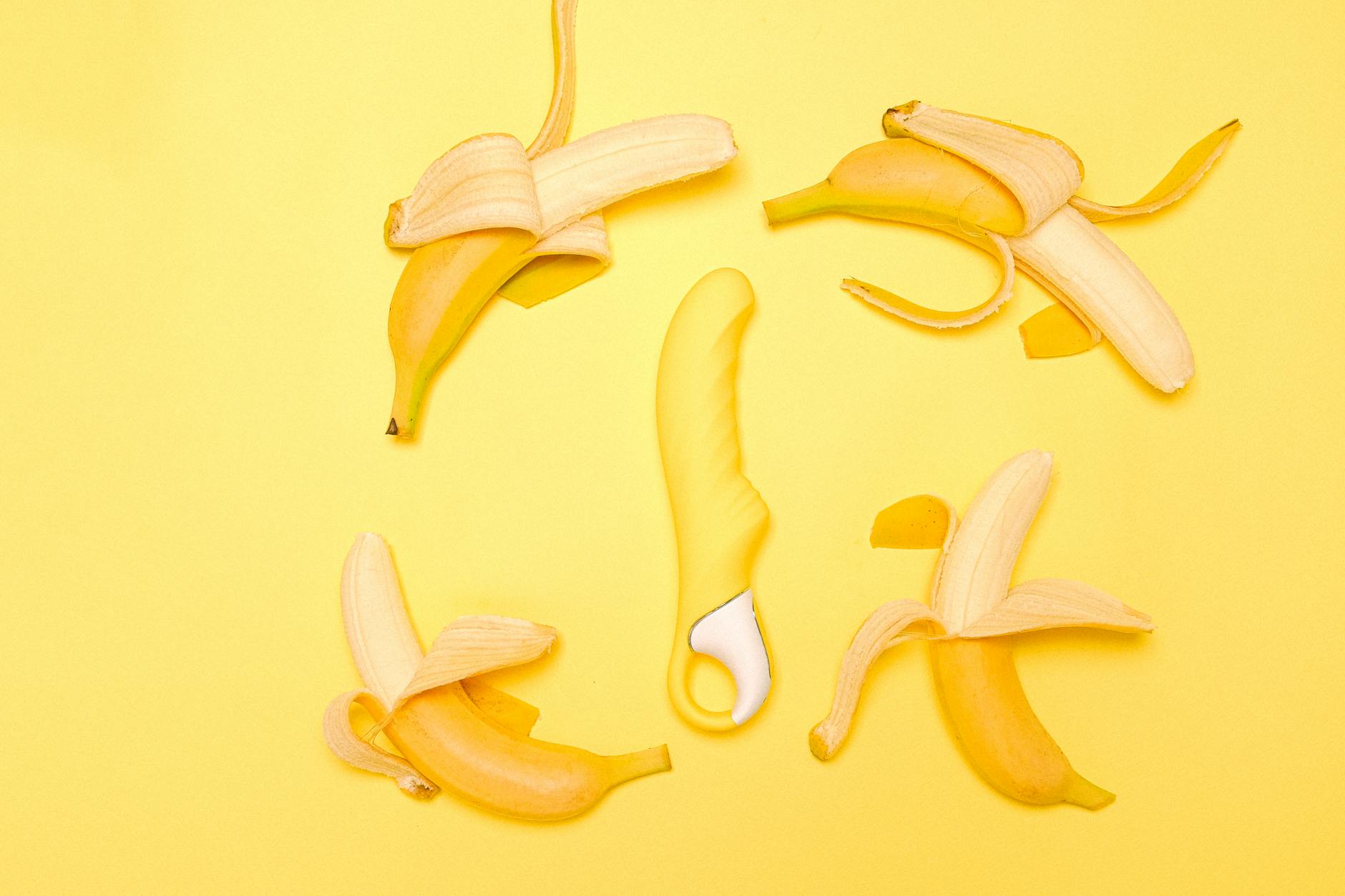
This is important. Lemon clitoral vibrators work through suction and gentle pulse patterns, not friction. That matters for anxiety in a specific way.
Friction-based toys (regular vibrators, wands) require you to build arousal gradually. They work best when you already have some desire momentum. They ask your body to keep escalating. When anxiety is present, that escalation feels like pressure, which triggers more anxiety.
Lemon sexual toys work differently. The suction pattern bypasses some of the escalation requirement. It creates a very specific, concentrated sensation that can interrupt the anxiety loop. You don't have to "work up" to it. The sensation meets you where you are.
But here's the real magic: suction forces your brain to shift focus. Instead of ruminating ("Am I doing this right? Is this working? What if my partner notices I'm not that into it?"), your brain has to track a very specific physical sensation. It's like your mind gets rerouted from the anxiety broadcast to something concrete and present.
That's not placebo. That's nervous system biology.
The pre-pleasure ritual that changes everything
Before you use your lemon vibrator, your job is to lower your nervous system state. Not through meditation or deep breathing necessarily. Those work for some people and feel like more pressure for others.
Here's what actually works clinically:
Step one: Name the anxiety without judgment. "I'm worried about X. I have a lot on my mind today." Don't try to fix it or logic it away. Just name it. This literally signals to your amygdala that you're aware of the threat, which paradoxically makes it less of a threat.
Step two: Do something that makes your body feel safe. Not sexy. Safe. Warm blanket. Hot shower. Dimmed lighting. A room where you won't be interrupted. Whatever makes your nervous system go, "Okay, we're actually secure here."
Step three: Set a time boundary. "I'm doing this for 15 minutes, and then I'm done, and that's enough." Anxiety loves open-ended scenarios. Giving your nervous system a clear endpoint transforms the experience from "Am I going to orgasm?" to "I'm spending 15 minutes exploring." Huge difference.
Starting with your lemon vibrator when your head is loud
Begin at a low intensity. Not because you're building up, but because you want to ease your nervous system into the sensation without it feeling like an invasion.
Patterns one through three on a lemon vibrator are usually best for anxiety-blocked arousal. The rhythm is soothing in a way that higher intensities aren't. You're training your body to associate this tool with ease, not urgency.
Use lubricant. Not because you need it physically necessarily, but because the act of applying it is part of the ritual that says to your nervous system, "This is intentional. This is for me. I'm taking care of myself." Ritual lowers anxiety. Product selection doesn't really matter; water-based works perfectly.
Focus on sensation rather than outcome. This is the hardest part because your brain wants to know if this is "working." But working toward what? If you're anxious, there's no finish line that will quiet the anxiety. So let the goal be: "I'm noticing what I feel right now." That's it.
When your partner is involved
If you're with a partner and anxiety shows up, the dynamic changes. Many people feel embarrassed that they can't "just relax" and become intimate. That shame piles on top of the anxiety, and now you've got a two-layer problem.
The conversation to have with your partner is not "I'm sorry I'm anxious." It's "My nervous system is a bit activated, and I want to try something different." Then you explain that you're going to use your lemon vibrator during partner time, and they can watch, touch you non-genitally, or give you space. You're not replacing them. You're creating conditions where your body can actually respond.
Many partners find that watching their person use a lemon clitoral vibrator is actually more intimate than traditional sex when anxiety is present, because there's no performance pressure on either side. You're just present together.
The reframe that matters most
Anxiety-blocked arousal isn't a sign that you're broken or that your relationship is dying or that you've "lost your sexuality." It's a sign that your nervous system has learned something in your environment isn't safe enough for pleasure.
That's a message worth listening to. Maybe it's the specific relationship dynamic. Maybe it's the pace of your life. Maybe it's unprocessed grief or exhaustion. Maybe you need boundaries you haven't set yet. Pleasure doesn't return when you force it through willpower. It returns when you genuinely address what your nervous system is trying to tell you.
Lemon adult toys are a tool, not a fix. But they're a really good tool for breaking the anxiety-arousal loop and giving your body permission to remember what pleasure feels like. And sometimes that's all your nervous system needs to start loosening its grip.
FAQ
Can anxiety about using a vibrator itself block arousal?
Absolutely. If you're anxious about "doing it right" or worried about noise or concerned you should be experiencing pleasure differently, that meta-anxiety layers on top of everything else. Start with a lemon vibrator alone, in a locked room, with no one to perform for. Remove as many variables as possible.
How long does it usually take for the anxiety loop to break?
A few weeks of consistent practice, usually. Your nervous system learns through repetition that this context is safe and that pleasure is possible. But progress isn't linear. You might have two good experiences and then one where anxiety shows back up. That's normal. The key is continuing to practice without shame about the setbacks.
Is it better to address the anxiety with a therapist first, or start using lemon vibrators?
Both, ideally. A therapist can help you understand what the anxiety is about. But pleasure work happens in the body, not just in conversations. Some people need to feel their body respond again before they can trust that the anxiety is actually manageable. Your lemon clitoral vibrator is part of your toolkit, not a replacement for professional support.
What if the vibrator feels too intense and makes my anxiety worse?
Start with a different tool or pattern. Or take a break entirely and focus first on the nervous system reset ritual without any toy. Some people with high baseline anxiety respond better to How to Use Lemon Vibrators When Your Body Feels Less Responsive to Touch practices before they're ready for a vibrator.
Can I use lemon sexual toys if I'm on anxiety medication?
Yes. Many anxiety medications slightly reduce sensation or slow down arousal response, but they don't block pleasure entirely. You might need to spend more time warming up, or you might find that lemon vibrators actually work better for you because the sensation is concentrated rather than diffused. Work with your body, not against it.
Should I feel guilty if my partner wants sex but I'm too anxious?
No. Your nervous system's boundary is real and valid. But your partner deserves honesty. "I want to be close to you, and I'm not ready for sex today. Can we do X instead?" That level of communication actually deepens intimacy more than forcing yourself through it.
References
The nervous system concepts in this post are grounded in polyvagal theory (Porges, 2011) and trauma-informed somatic work, though applied to performance anxiety rather than clinical trauma. The research on anxiety and sexual response dates back to Masters and Johnson (1966) but has been expanded by contemporary researchers like Emily Nagoski and Laurie Mintz, who study the neurobiology of arousal and desire specifically in the context of everyday stress and relationship dynamics.