Let's start with the real part
Introducing a lemon clitoral vibrator into partnered sex works. It deepens arousal, creates new sensations for both of you, and often restarts conversations that have gotten stuck. But it only works if you approach it as collaboration, not performance. The thing most couples get wrong is treating it as a problem to solve ("she can't come") instead of a pleasure to explore together.
Here's what I've seen work after years of coaching couples through this exact transition.
The conversation comes first
You don't introduce a toy during sex. You talk about it before. I know that sounds unromantic. It's not. It's the opposite of unromantic.
The opener that works: "I've been thinking about trying something new together. Nothing weird. Just something that might feel different. Would you be open to that?" That's it. No manifesto, no negotiation. Just honest curiosity.
What you're doing here is three things at once: signaling that you care about novelty, checking consent, and creating space for them to have thoughts or concerns. If they ask what you mean, you can say, "A toy designed for external stimulation. Something that lets both of us focus on sensation instead of performance." Keep it simple.
The worst opener is anything that sounds like blame: "I need this to..." or "Sex has been..." That frames the toy as compensation for something missing. It's not. It's addition, not subtraction.
Why the conversation matters more than the toy
Many people have internalized shame around needing or wanting a toy. They worry it means they're not enough, or their partner isn't doing it right. Neither is true. But those fears are real and sticky, and they don't dissolve because you bought the right vibrator.
When you have the conversation first, you're essentially saying: "I want this with you, not instead of you." That distinction changes everything. It moves from "something's broken" to "I want us to explore together."
If your partner has hesitation, listen. It might be practical ("Where would we even keep it?"), insecurity ("Does that mean I'm not enough?"), or a timing thing ("I'm not ready yet"). None of those require you to abandon the idea. They just require you to hear what's actually being said and address that, not the toy.
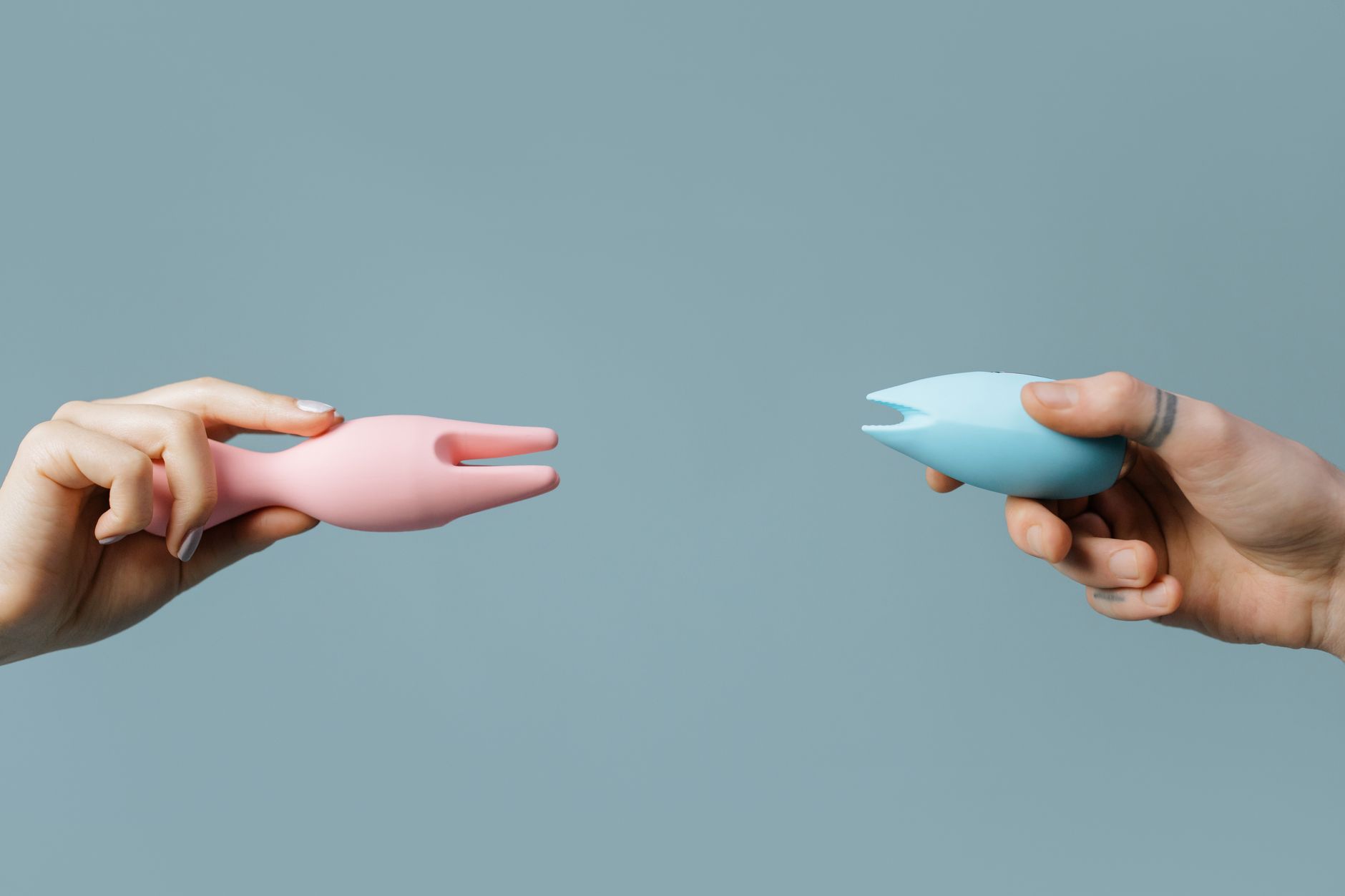
Photo by cottonbro studio on Pexels
The first time: timing and setup matter
Don't introduce it when you're already highly aroused. Introduce it when you're relaxed and both present. Many couples I work with do this on a weekend afternoon, fully clothed, just holding it and talking about it. "This is a lemon clitoral vibrator. It works like this. It feels like this when it's on." No pressure. Just familiarity.
If you're going to use it for actual sex the first time, build more foreplay than you normally would. Thirty to forty minutes instead of fifteen. This gives both of you time to settle into it, and it takes the pressure off the toy to "deliver" immediately. You're not trying to solve anything. You're just playing.
Start with lower intensity settings. A lemon vibrator like the Lem is designed for precision, but you don't need to go straight to maximum. Begin at pattern one or two, get used to how it feels, and adjust from there. You'll notice your partner's response to the intensity shift. That feedback is real-time information about what's working.
Positioning that actually works
Here's what I see couples try first: penetrative position with the toy used on the side. It's fine, but it's not the easiest entry point. The positions that build more connection early on are different.
Position one: facing each other, side-by-side. You're propped up on your side, they're propped on theirs, you're entering from behind, and the toy accesses the clitoris from the front. This lets you see their face. You can kiss. You can talk. It's intimate and less performance-y than facing-down positions.
Position two: you're sitting, they're facing you in your lap. The angle gives you both access. You can hold them. You can see what they're feeling. The toy is easy to position and adjust. And honestly, the psychological component of this closeness is huge for getting past the weirdness of trying something new.
Position three: they're on their back, you're between their legs. This is the most common, and for good reason. It gives you both a clear view, and the toy sits naturally. You can set a pace together. It's straightforward.
What these have in common: you're facing each other or close enough to touch easily. You're not separated. The toy is addition, not replacement.
What actually happens during sex
Your partner's arousal will accelerate. Not because the toy is magic, but because the stimulation is precise in a way that fingers often aren't. You'll likely notice their breathing change, their pelvic floor tighten slightly, maybe their eyes glaze. That's all normal.
What might surprise you: your own arousal might shift. Some partners find watching their partner come with a toy intensely hot. Others find the novelty of being "alone" with the toy shifts their headspace. Both are common. Check in afterward about what you each felt.
If orgasm happens, great. If it doesn't, that's also fine. The first time is about getting used to the sensation and the presence of the toy together. Orgasm is a bonus, not the metric.
One thing I recommend: keep one hand free. Use it on their chest, their thigh, their face. The physical contact of your actual touch grounding the experience of the toy matters psychologically. You're not handing off. You're participating.
Troubleshooting the common hiccups
If the toy feels cold, warm it in your hands first. If the angle feels off, shift your body an inch. If the intensity is too much, lower it immediately. You're not being weak or sensitive. You're being honest. More people abandon toys because of poor initial technique than because the toy itself is wrong.
If one of you feels disconnected or weird afterward, talk about it the next day. Not in the moment, when hormones and vulnerability are peak. Just ask: "How did that feel? What was good? What was strange?" This isn't a formal debrief. It's just conversation.
If your partner came and you didn't, that's an invitation to solo exploration. Ask them if they're willing to watch or participate while you use the toy. How to use lemon vibrators for better orgasms with less sensation pressure covers this in more depth if you want specific techniques.
Building it into regular sex
After the first time, the toy should feel less like an experiment and more like part of your palette. Some couples use it every time. Others use it once a week or when they want to explore longer sessions. The frequency doesn't matter. What matters is that it stops being weird and starts being normal.
Many couples find that once they're comfortable with the toy, they can use it faster and with more intensity than they could initially. The novelty wears off, the pleasure deepens. That's the arc we want.
One shift I notice: couples who start using a toy together often report that the conversation about sex becomes easier overall. You've already had the awkward talk. You've already been vulnerable together. Everything else gets easier from there.
When to involve your partner in selection
If you haven't bought a toy yet, involve them in choosing. Show them videos or descriptions. Let them handle it. Let them decide on color or intensity level. This moves them from passive to active, from thing happening to them to decision they're making. The buying guide walks through the differences between lemon clitoral vibrators if you both want to compare.
If you've already bought one and haven't told them yet, that's fine. Just frame it as a thought you had, not a secret. Honesty moves faster than guilt.
The emotional piece
Using a toy together often means something bigger than the toy itself. It means you're both willing to be curious. It means you're not locked into one way of doing things. It means you trust each other enough to try something awkward.
That trust is what deepens intimacy. The lemon vibrator is just the object lesson in it.
People also ask
Will using a toy make my partner feel like they're not enough?
Only if you frame it that way. If you approach it as "I want us to explore this together" instead of "I need this because you're not doing it right," your partner will hear the difference. The toy is about addition and novelty, not replacement or fixing. That message has to come through in how you talk about it, not just in what you say. If your partner already struggles with insecurity, take extra time with the conversation. Reassure them that you're attracted to them and excited about them. The toy just opens a new door.
What if my partner doesn't want to use it?
Respect that. Ask why, listen, and don't push. The resistance might be temporary, or it might be stable. Both are valid. If it's something you really want to explore, reconnect after extended time without sex covers ways to revisit the conversation later without pressure. Forcing it creates resentment, which is the opposite of what you want.
Can we use it if we've never talked about sex before?
It's harder, but not impossible. Start with the conversation first. Use the toy as permission to talk about pleasure more generally. What feels good? What would you like to try? What are you nervous about? The toy is just the conversation starter. The real intimacy is in the honesty.
Does it matter what kind of lemon vibrator we use?
The clitoral suction design of lemon vibrators like the Lem works really well for partnered use because the stimulation is focused and controllable. But what matters more is that you both feel comfortable and that you start slow. A good toy is half the equation. The other half is patience and communication.
What if it doesn't feel good the first time?
That's information, not failure. Maybe the intensity was too high. Maybe the angle was off. Maybe you both just needed more time to relax. Try again with adjustments. If after a few attempts it's genuinely not working, set it aside and revisit it in a few months. Pleasure isn't linear, and what doesn't work today might work next season.
How do I bring this up if my partner has never suggested it?
With curiosity, not judgment. "I've been reading about this" or "I've been thinking about what might feel different" is honest and low-pressure. You're not accusing them of not trying hard enough. You're offering an idea. If they're not interested, that's the end of it. If they are, you've opened a conversation that might not have happened otherwise.
The real takeaway
Using a lemon vibrator with a partner isn't about the toy. It's about deciding together that your sex life is worth experimenting with. That you're both curious. That vulnerability is okay. That pleasure matters enough to have awkward conversations.
If you're nervous about bringing this up, you're not alone. Almost every couple I work with is. But almost every couple I work with who actually goes through with it reports that it shifted something positive. Not just sexually, but in how they communicate about other things too.
Start with the conversation. Everything else follows from there. If you want to talk through how to have that conversation or how to navigate what comes after, reach out. That's what I'm here for.