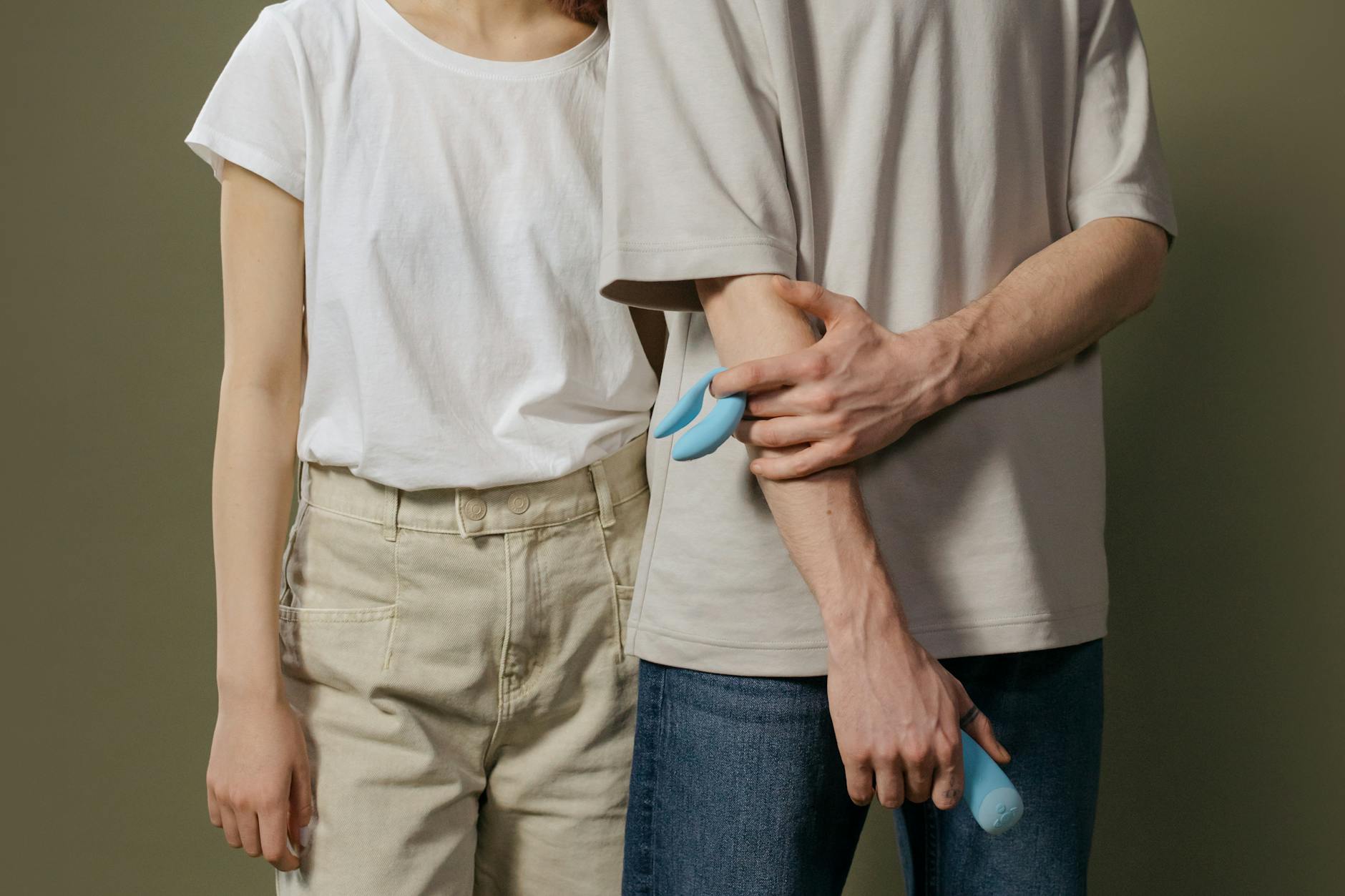
The gap nobody talks about
Let's be real. Months or years without sex changes how your body responds. Not permanently. But noticeably. And most people don't know what to expect when they're ready to start again.
Maybe there was a medical reason. Maybe depression, grief, or relationship strain. Maybe kids, exhaustion, or just life. The reason doesn't matter as much as this: your nervous system has learned to stay quiet. Reactivating it isn't instant, and it doesn't require a partner present to do it well.
This is where lemon vibrators and other clitoral vibrators come in. Not as a fix. As a reset.
What happens when sex goes dormant
Your capacity for pleasure doesn't disappear. But the neural pathways that fire during arousal do get quieter without stimulation. Blood flow to genital tissue decreases. Lubrication takes longer to arrive. Sensation threshold shifts. The pelvic floor, which should relax during arousal, sometimes tightens instead from months of disuse. Your brain's pleasure centers still function, but they're running on idle.
This is completely normal. Your body isn't broken. It's just out of practice.
Here's the thing that catches most people off guard. When you restart with a partner, there's pressure. Performance anxiety kicks in. Your partner might be nervous too. You're both hyperaware of the gap, which means the system tightens further. That's where solo exploration first, with a partner later, actually works better than jumping straight into partnered sex again.
Lemon sexual toys, particularly suction-based vibrators like the Lem, are gentler than traditional vibration for reawakening sensation because they work with your nervous system rather than against it. Suction doesn't require as much initial sensitivity to register. It spreads stimulation across a wider surface. For people who've had a long break, that matters.
Why sensation returns slower than you'd think
Two physiological reasons. First, the clitoris is packed with nerve endings, but those endings respond best to consistent, moderate stimulation. After a long pause, they're less reactive. A lemon vibrator's suction pattern reaches those nerves through gentler pressure than a traditional vibrator, which often relies on higher-frequency buzz that can feel overwhelming after a break.
Second, your brain needs permission. Arousal isn't just physical. It's cognitive. After months without sex, part of your mind might be expecting it to feel wrong, feel too intense, or feel disconnected. This anticipatory anxiety actually suppresses arousal. Solo exploration with a lemon clitoral vibrator removes the relational pressure. You're not performing. You're not watching someone else's reaction. You're just relearning what your own pleasure feels like.
That solo piece is crucial. I recommend it to nearly every client restarting after a gap, whether they'll eventually have a partner present or not.
The restart protocol that works
Three phases. Each takes as long as it needs.
Phase one: solo, no pressure. Set aside 20-30 minutes when you're relaxed and won't be interrupted. Start a lemon vibrator on the lowest setting. Don't aim for orgasm. Seriously. Your job is just to notice sensation. Does it feel warm? Tingly? Does it build, or stay flat? Most people find that arousal drifts in slowly after a long break. Expect 10-15 minutes of "hmm, maybe something's happening" before anything obvious registers. This is normal. Repeat this 3-5 times over a week or two before moving to the next phase.
Phase two: longer exploration. Once sensation is returning and arousal feels less distant, extend the session to 30-45 minutes. Try different patterns if your device has them. Vary pressure and speed. A lemon vibrator or other clitoral vibrator lets you do this without the jarring intensity shift that traditional toys require. You might orgasm. You might not. Both are fine. This phase is about rebuilding the neural pathway, not chasing release.
Phase three: partner communication. Before you bring a partner in, tell them what you've been working on. Not every detail, but the frame: "I want to ease back in, and I'm learning what feels good again." If you're with someone, they likely feel the gap too. They might be worried about hurting you, or anxious that you've lost interest. Naming the restart explicitly heads off a lot of silent tension. Then restart with them present, but solo at first with them watching or in the room, so you're not suddenly back to the full pressure of partnered sex.
What lemon adult toys do differently
Lemon vibrators use suction and pulsing rather than traditional vibration. That distinction matters when you're restarting. With a long break, your tissue is often slightly less engorged, which means traditional vibrators sometimes feel scratchy or too intense. Suction distributes stimulation more evenly. It also provides deeper clitoral stimulation without requiring as much surface sensitivity, which is perfect if you've got numbness or reduced feeling after your gap.
If you go the lemon clitoral vibrator route, start on the first or second pattern. Don't jump to intensity level five just because you want faster results. Your nervous system is rewaking. Let it take the time it needs. Most people report feeling more connected to their body, not less, by the end of this phase.
The partner conversation that nobody has
One of the trickiest parts of restarting after a long gap is that your partner might feel rejected or anxious. They might worry that you've gone off sex entirely, or that there's something wrong with the relationship. They might feel guilty for the gap if it was related to them. None of those feelings are weird. But they block reconnection.
Before you restart, have this conversation. Not during sex. In a regular moment, maybe over coffee. "I want to rebuild sexual connection with you, and I'm going to take some time solo first because I want to feel good and confident again. That's not about you. It's about me getting my nervous system back online." That clarity usually softens a lot of anxiety on both sides.
If your partner is also nervous about restarting, read about how lemon vibrators work when both partners are nervous. Shared experience often eases the awkwardness.
Timeline expectations
You'll probably notice something in week one. Real reconnection usually takes 4-8 weeks. Some people feel like themselves again faster. Others need longer, especially if the gap followed trauma or grief. Neither is wrong. Your body isn't on a schedule.
If after 8-12 weeks of consistent exploration, arousal still feels completely absent and there's no physical pleasure returning at all, talk to your doctor. Sometimes extended gaps follow illness or medication changes that need medical attention. That's not failure. It's data.
When to bring a partner back in
Once you can consistently feel pleasure solo, and you're not anxious about it anymore, you're ready. That usually means you can spend 20-30 minutes with a lemon vibrator and genuinely feel something shifting in your body. Once that's your baseline, partnered exploration becomes a team project rather than a solo recovery mission.
Start with manual touch before going back to penetrative sex. Your partner's hands, their lips, their breath. These are less intense than full intercourse and let you rebuild that intimate sensory dialogue. When you're both ready to use a clitoral vibrator together, that suction sensation becomes something you're sharing rather than something you're chasing alone.
The thing people don't expect
Many couples tell me that restarting after a gap is actually better than their sex life before. Why? Because you're intentional now. You're not running on autopilot. You know what your body needs. You've had honest conversations. You've slowed down. And honestly? That changes everything.
Your pleasure coming back isn't failure to overcome. It's a doorway you get to walk through twice. First alone. Then together. That's not lost time. That's a restart that actually sticks.
People also ask
How long does it take for sensation to return after a year or more without sex?
Most people report noticeable sensation shifts within 2-4 weeks of consistent exploration with a lemon vibrator or similar device. Full reconnection usually takes 6-12 weeks. But everyone's timeline is different. If you've had trauma, hormonal shifts, or illness during your gap, it might take longer. Patience genuinely helps here more than pressure ever could.
Can you use a lemon vibrator if you haven't had sex in a really long time?
Yes, and it's often easier than jumping straight to partnered sex. Lemon sexual toys like clitoral vibrators are gentler on tissue that's been dormant, and they remove the performance pressure that often makes restarting harder. Start on a low setting and give yourself permission to just feel, not rush to orgasm. Solo exploration first makes everything easier.
Is it normal to feel nothing the first few times?
Completely normal. After a long break, your nervous system is quiet. A lemon clitoral vibrator might feel like gentle buzzing or pressure at first, with no obvious arousal. That's your baseline. Over weeks, as you keep exploring, sensation builds. Think of it like relearning an instrument after years away. The first day feels awkward. By week three, muscle memory starts coming back.
Should you restart with a partner or alone first?
Alone first, almost always. Partner pressure adds performance anxiety that actually suppresses arousal. When you explore solo with a lemon vibrator first, you rebuild the neural pathway without that cognitive load. Then, once you feel good alone, bringing a partner in becomes additive, not evaluative. You're not performing. You're sharing something you've already reconnected with.
What if you've restarted and it still doesn't feel like it used to?
It often doesn't, and that's fine. Your body changes. Your preferences change. What felt amazing ten years ago might not be your thing now. A lemon clitoral vibrator works well for a lot of people restarting because it's a gentler, different sensation than what came before. Use that as permission to explore what actually feels good now, rather than chasing a memory.
Can stress or anxiety block arousal even after you've restarted physically?
Yes. Arousal is 50 percent physical and 50 percent mental. You can have all the sensation data coming in, and if your brain is spinning about performance, judgment, or past hurt, nothing fires. This is where the partner conversation really matters. Naming the gap, having permission to go slow, and separating "my body is learning again" from "something's wrong with us" makes a massive difference. That peace is where actual reconnection happens.