Here's the thing about stress and desire
Stress doesn't just live in your head. It lives in your nervous system, your blood vessels, your muscles, and your pelvic floor. When your brain perceives threat (whether that's a deadline, a fight with your partner, or just existential dread scrolling), your body shifts into sympathetic overdrive. Blood vessels constrict. Adrenaline floods in. And arousal, which requires the exact opposite state (parasympathetic calm, blood flow expansion, relaxed muscles), gets shut down like a light switch.
This is physiological. This is not laziness or lack of desire for your partner. Your body is doing exactly what evolution built it to do: choose survival over pleasure.
The problem is, in modern life, that threat never really ends. Work stress bleeds into evening. Financial worry hums underneath date night. A hard conversation with family stays stuck in your shoulders. And by the time your partner or your own hand reaches toward pleasure, your nervous system is still in fight-or-flight mode.
Why stress sabotages arousal at the nerve level
Let me break down what's actually happening physiologically when stress shuts down arousal.
The clitoris is packed with nerve endings. Around 8,000 of them, to be exact. These nerves need your nervous system to be in a receptive state to fire properly. When you're stressed, your sympathetic nervous system dominates. Your pupils dilate, your jaw clenches, your breathing gets shallow. The blood flow that would normally pool in your genitals gets redirected to your large muscle groups instead. Your body genuinely believes it needs to run from a predator, not rest in pleasure.
Meanwhile, vaginal lubrication requires parasympathetic activation. Arousal requires it. The sensitivity of your clitoris depends on it. Stress literally deactivates all three.
There's also the cognitive piece. When you're stressed, your prefrontal cortex (the thinking, planning part of your brain) is in overdrive while your limbic system (the feeling, sensing part) is dampened. This is why stressed people often describe arousal as impossible to access. You're not just physically blocked. You're mentally somewhere else.
How lemon sexual toys work differently when your nervous system is tight
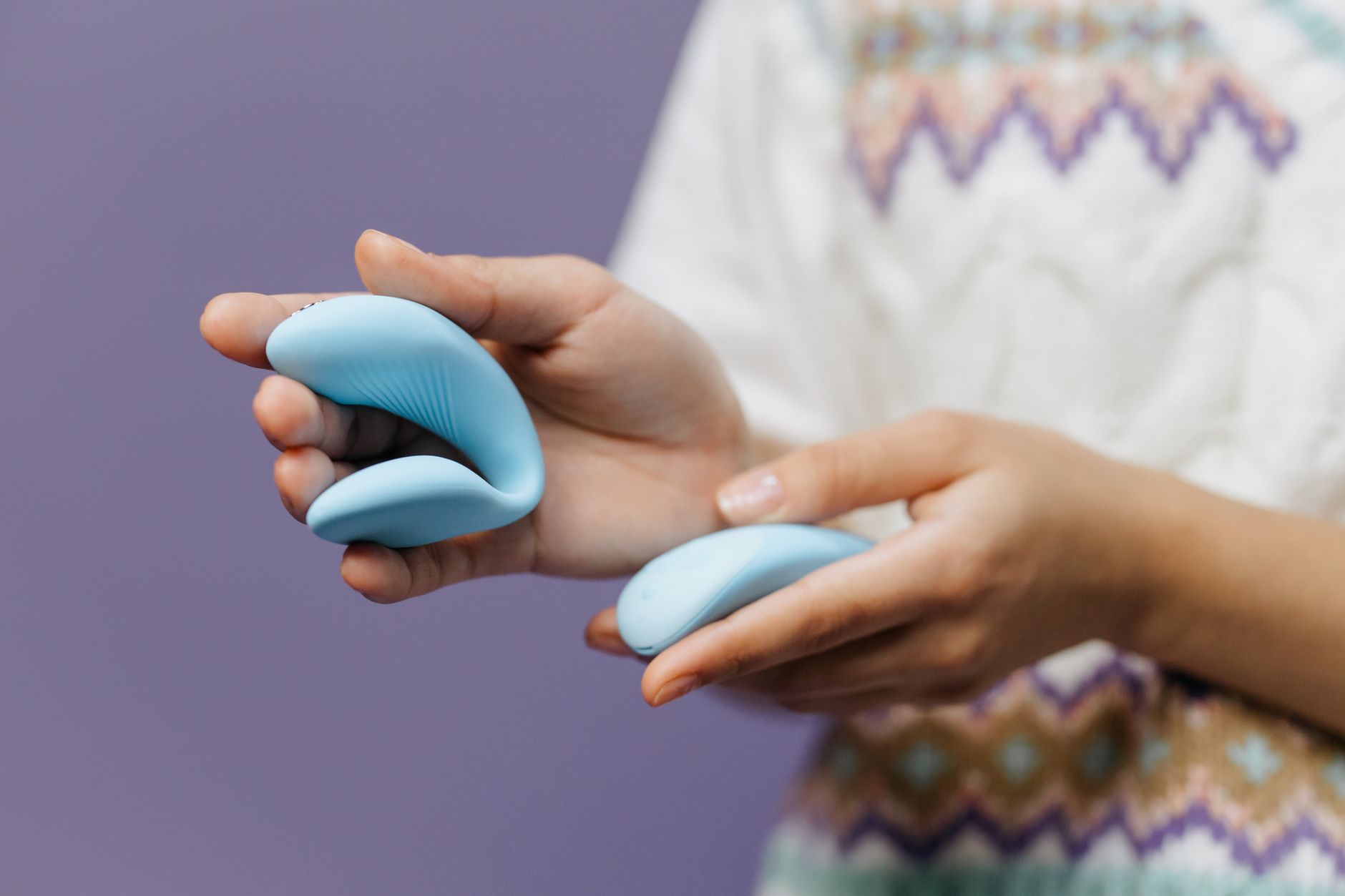
Here's where lemon clitoral vibrators become genuinely useful for stress-affected arousal.
Unlike traditional vibrators that rely on your body to be already somewhat aroused and receptive, lemon vibrators work through a different mechanism: sustained suction and gentle pulse patterns. They don't require you to be relaxed to start. They help create the relaxation.
When you apply a lemon vibrator at a low intensity, the suction pattern stimulates the clitoral nerves without the kind of pressure that requires your body to already be in pleasure mode. It's like signaling to your nervous system: "This is safe. This feels good. You can let your guard down." The sensation itself is often enough to begin shifting you from sympathetic to parasympathetic activation.
I've worked with countless people in my practice who describe this exact progression: they turn on their lem vibrator because they feel obligated, not because they feel desire. But within three to five minutes of gentle suction on a low setting, something shifts. Their breathing slows. Their shoulders drop. They start to feel something in their body again.
This is not placebo. The sustained, rhythmic stimulation of a lemon vibrator actually does help regulate an overactive nervous system. It gives your brain something else to focus on besides the stress spiral.
The warm-up window expands when stress is involved
When you're stressed, you can't rush arousal. This is where lemon adult toys become a game-changer because they make a longer warm-up feel effortless rather than tedious.
Normally, you might spend ten minutes trying to get in the mood. When stress is present, that can stretch to twenty or thirty minutes. With a traditional toy, this feels endless. With a lemon vibrator at pattern one, many people find that the sensation itself becomes the warm-up. You're not waiting for arousal to arrive. You're actively inviting your nervous system to shift.
I recommend setting a timer for fifteen to twenty minutes when stress is high. Start at the lowest intensity. Don't demand anything of yourself. Just let the sensation work. Your job is to breathe, to notice where your body wants to be touched, to let your mind quiet.
This is actually more effective than trying to "think yourself into" arousal. You're bypassing the cognitive block entirely.
Creating the environment matters as much as the tool
A lemon vibrator helps. But context determines everything when stress is blocking you.
If you're using a lemon clitoral vibrator in a room where you're braced for interruption, where your phone is dinging, where you can hear your partner or roommate moving around, your nervous system is still partly in alert mode. The vibrator becomes less effective because you're fighting two battles: managing the external threat and managing the internal arousal.
Before you reach for your lem vibrator, create actual safety. Lock the door. Put your phone in another room. Light a candle if that helps you mark the space as intentional. Take three deep breaths. Let your partner know you need uninterrupted time (they don't need to know you're using a toy, but they do need to know the boundary exists).
I often suggest to clients that using a lemon vibrator is as much about protecting your time as it is about the device itself. The ritual of setting up, the decision to close yourself off from obligations for twenty minutes, the permission you're giving yourself, all of that contributes to whether your nervous system can actually downshift enough for pleasure to return.
When stress and arousal loss is a sign of something bigger
There's a difference between temporary stress killing arousal and chronic stress permanently dampening it.
If you've been stressed for weeks or months and notice that nothing, including a lemon vibrator, feels pleasurable anymore, that's worth paying attention to. Sometimes stress-induced arousal loss is part of depression or burnout. Sometimes it's a sign that you and your partner have drifted and need to reconnect emotionally before pleasure returns.
A lem vibrator is a tool for reconnecting with sensation when stress is in the way. It's not a fix for relationship disconnection, depression, or burnout, though it can be part of addressing those things. If pleasure stays absent even when you're using the right tool and giving yourself the right conditions, that's a conversation to have with a therapist or counselor.
I also want to note: sometimes stress-blocked arousal is telling you something important. It might be your body's way of saying the relationship isn't meeting your needs anymore, or that you need to make a major life change. Don't dismiss that message just because you've found a tool that helps temporarily.
The breathing component you can't skip
This might sound obvious, but when people are stressed, they don't breathe. Or rather, they take short, shallow breaths that keep their nervous system in fight-or-flight mode.
Using a lemon vibrator while you're holding your breath defeats half the purpose. The suction and pulse are triggering pleasure nerves, but shallow breathing is still telling your brain "we are unsafe."
Before you start, do this: breathe in for a count of four, hold for four, breathe out for four. Do this five times. Then, as you're using your lem vibrator, try to maintain a slow, deep rhythm. Inhale through your nose, exhale through your mouth. Let your belly expand with each breath.
This is the parasympathetic activator. This is what tells your body it's safe to feel pleasure.
Many people find that they naturally start breathing this way once the vibrator is on and the sensation arrives. But especially in the first few minutes, you might need to consciously redirect your breath. It matters.
Pairing a lemon vibrator with solo time is often more effective than partnered use when stressed
When stress is killing your arousal, there's often a secondary layer: performance pressure. If you're trying to engage with a partner while you're already stressed, you're now managing three things: your stress response, your blocked arousal, and the awareness that your partner is waiting for you to "come around."
This is exactly when using a lemon vibrator solo becomes genuinely therapeutic. No one's waiting. No one's watching. There's no goal except to feel sensation again. Many of my clients describe solo time with their lem vibrator as the first moment in weeks where they felt permission to prioritize their own pleasure without guilt.
Once you've reconnected with sensation on your own and your nervous system has had practice downshifting into arousal, partnered sex often becomes easier. You've proven to yourself that pleasure is still accessible. You've given your body the message that safety and arousal can coexist. From there, you can gradually bring your partner back in.
People also ask
Can stress permanently damage my arousal?
No. Stress can temporarily disrupt the physiological conditions that allow arousal, but it doesn't change your capacity for pleasure. Once the stress is processed or managed, arousal returns. The challenge is that stress-blocked arousal can become a habit if you stay in high stress for too long. You start bracing against pleasure out of pure nervous system memory. Using a lemon clitoral vibrator in a calm environment helps interrupt that habit and remind your body that arousal is still possible.
How long does it take for a lemon vibrator to help with stress-blocked arousal?
Most people notice a shift within the first three to five sessions. Some feel it within the first ten minutes of using a lem vibrator. But if you're deeply stressed or in burnout, it might take longer. Give yourself at least two weeks of regular use (three to four times weekly) before you decide whether it's working for you. Your nervous system needs time to learn that this sensation is safe.
Should I use a lemon vibrator if I feel numb to pleasure from stress?
Yes, but with realistic expectations. If you're feeling genuinely numb, a lemon adult toy won't instantly make you feel everything. What it does is create the conditions for sensation to return. Start at the lowest intensity. Your goal isn't orgasm. Your goal is to notice any sensation at all. Over time, numbness lifts as stress decreases and your nervous system downregulates.
Can I use a lemon vibrator while I'm still managing stress, or do I need to wait until I'm calm?
You don't need to wait for perfect calm, because that's not realistic in modern life. What you do need is fifteen to twenty minutes of protected time and an intention to step out of stress mode temporarily. The vibrator itself helps create that shift. Use it as part of your stress management, not as a tool for when stress is already gone.
Is there a difference between using a lemon sucker for stress-blocked arousal versus other types of vibrators?
Yes. Lemon clitoral vibrators work through suction rather than pure vibration, which means they stimulate nerves without requiring you to already be in an aroused state. This is particularly helpful when stress has dampened your arousal response. They're also generally less intense, which means you can start gently and build, rather than jumping into high-intensity stimulation that might feel overwhelming when you're tense. Other vibrators can work too, but lemon sexual toys are specifically designed for this kind of gradual, nervous-system-friendly approach.
What should I do if a lemon vibrator doesn't help my stress-blocked arousal?
First, give it time and repetition. Second, check your environment and your nervous system. Are you actually able to relax, or are you still braced for something? Is your breathing slow and deep? Third, consider whether there's an emotional or relationship component to the arousal loss. Sometimes pleasure doesn't return because something deeper needs attention. That might be therapy, a conversation with your partner, or a major life change. A lemon vibrator can help, but it can't fix what needs fixing elsewhere.
The bottom line
Stress doesn't mean you've lost the capacity for pleasure. It means your nervous system is temporarily locked in protection mode. A lemon clitoral vibrator, used with intention and time and a commitment to creating safety, can help you shift that. But the tool is only part of it. The other part is giving yourself permission to prioritize your own sensation, to breathe, to close yourself off from the world for twenty minutes, and to let your body remember that arousal is still available to you.
If you're interested in learning more about how different tools work with your body, check out our guide on why lemon vibrators work better than traditional toys for sensitive clitoral tissue. And if stress is specifically tangled up with your relationship, how lemon vibrators improve intimacy for couples with mismatched arousal speeds might help you think through that conversation.
Your pleasure matters. Even when stress is loud, even when everything else feels urgent, your capacity to feel good is worth protecting.