
Here's the thing nobody talks about: arousal speed isn't a character flaw
One of you is ready to go in five minutes. The other needs twenty. Or thirty. And instead of that being a neutral fact, it becomes a story: "They're not attracted to me anymore." "I'm broken." "We're incompatible." "I always have to wait." None of that is true, and all of it destroys intimacy faster than almost anything else.
The gap between your arousal timelines isn't a problem to fix. It's a design feature you've been using wrong. A lemon clitoral vibrator changes how you approach that gap entirely.
Why arousal timing gets out of sync (it's rarely what you think)
People assume mismatched arousal speed means mismatched desire. Wrong. Here's what's actually happening:
Arousal isn't a on-off switch. It's a ramp, and everyone's ramp has a different slope. Some people's nervous systems flip to "go" in seconds. Others need sustained touch, mental focus, or a specific kind of foreplay to build momentum. Both are completely normal.
Then add real life: stress, distraction, hormonal cycles, medication side effects, or just that they're thinking about the work email they forgot to send. Arousal timing shifts weekly, sometimes daily. Expecting it to be predictable is like expecting the weather to match last Tuesday's forecast.
But here's the trap that destroys couples. When one person is ready and the other isn't, the faster person waits. Or the slower person rushes. Neither of you enjoys what happens next, and you both carry resentment into the bedroom. That resentment then tangles up with desire itself, which makes arousal even slower next time. You're stuck in a cycle.
How lemon vibrators actually solve this (the mechanics matter)
A lemon clitoral vibrator works because it does one specific thing: it lets the slower-arousing partner meet their own arousal timeline without making the faster partner feel rejected or bored.
Here's what changes:
The faster partner isn't waiting anymore. They're engaged, present, and touching you while you use the vibrator. Foreplay doesn't become "hurry up." It becomes collaborative.
The slower partner has permission to take their time. No performance pressure. Your body can warm up at its own pace because you're not watching your partner's face getting impatient. When you finally reach that peak of arousal, it feels authentic, not forced.
The synchronization becomes real. Once the slower partner reaches full arousal, you can set the toy aside and be together in a way that feels mutual. Or keep it in the mix. The point is you're both present and ready at the same time.
Lemon clitoral vibrators (sometimes called lem vibrators) work particularly well here because they're discreet, fast, and highly responsive. You're not fiddling with settings or waiting for the toy to "wake up." The suction mechanism engages nerves directly, so arousal builds efficiently.
The conversation that has to happen first
Before you bring a toy into this, you need to name what's actually going on. Not blame, not apology. Just truth.
"I notice my body warms up slower than yours. I don't want you waiting and feeling rejected. I also don't want to feel rushed. I'm thinking we could try something that lets us both enjoy ourselves without tension." That's the opener.
If your partner responds with defensiveness ("I don't wait, that's weird," or "Your body is fine, don't overthink it"), that's information too. Sometimes the gap between arousal timelines isn't the real problem. The real problem is that one person feels inadequate, or one person feels burdened by the other's need, and the arousal mismatch is just where it shows up. In that case, the toy won't fix it. A conversation with a couples therapist might.
But usually, when you name the problem clearly and offer a tool that respects both your timelines, partners respond with relief. "Yes, I've noticed that too." "I didn't want to say anything." "I was starting to feel bad about taking so long."
How to actually use a lemon sucker as a couples tool
First: this isn't a solo toy. The whole point is collaboration. Here's the rhythm that works:
Phase one: foreplay together. Kiss, touch, talk. No vibrator yet. This is about building connection and helping the slower partner's nervous system settle into arousal mode. Aim for 5-10 minutes.
Phase two: introduce the toy. The slower partner uses the vibrator while the faster partner stays present. This could mean they're still touching you (your thigh, your chest, your back). They could be watching. Could be talking to you. The point is the vibrator isn't replacing them. It's supplementing.
Phase three: build to synchronization. As arousal climbs, you might keep using the toy, or you might switch to other kinds of touch. Let your body tell you. The vibrator isn't a destination. It's a tool to get you both to the same place.
Phase four: whatever comes next. Some couples keep the toy in use throughout. Some set it aside once they're both ready. Some take turns. The frame is different for every couple, and it changes from encounter to encounter.
The key: communication during. "Faster?" "Is this working for you?" "Want me to keep going?" The toy isn't a substitute for attention. It's an invitation to pay better attention.
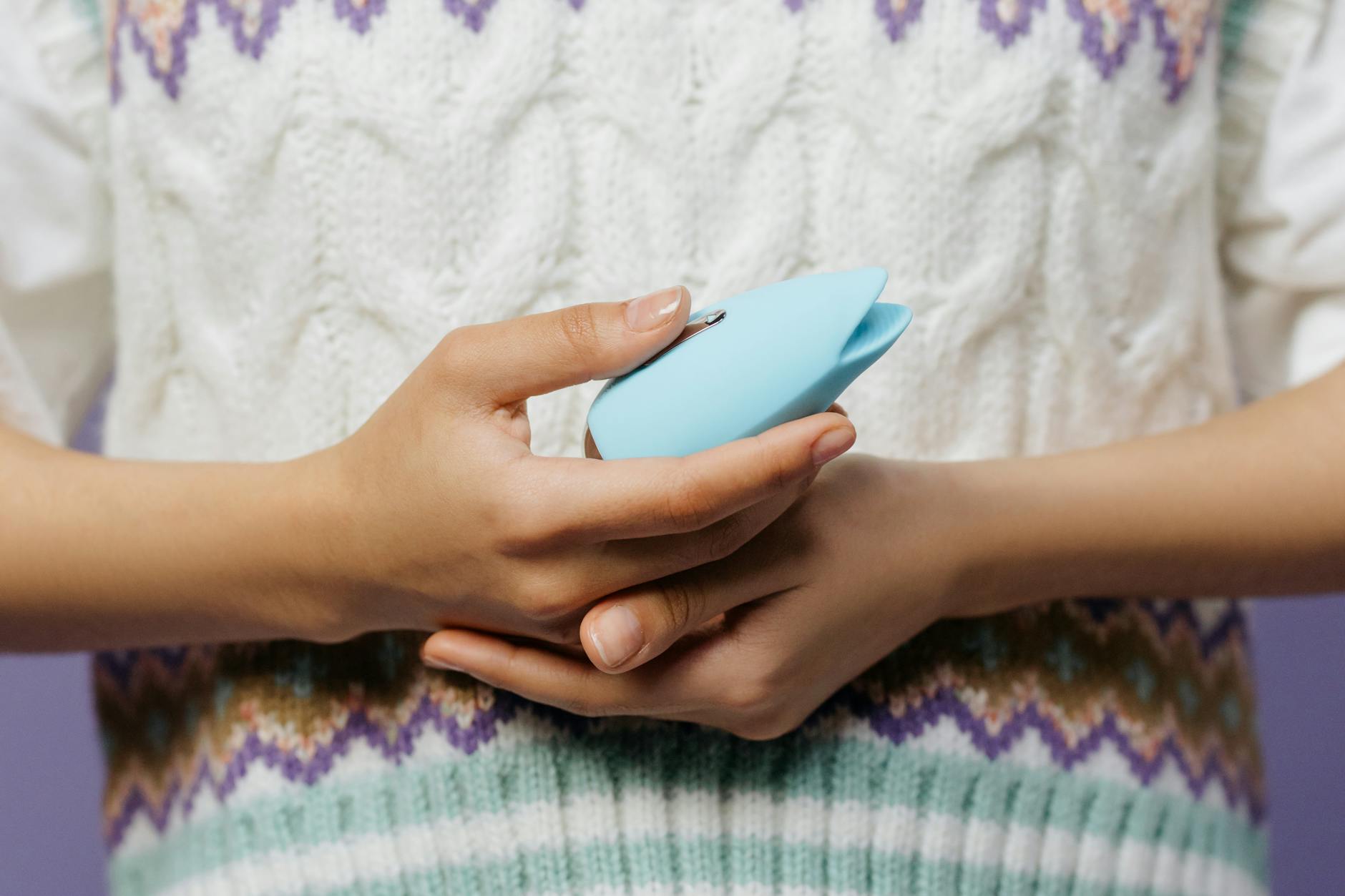
Photo by cottonbro studio on Pexels
What happens to the emotional stuff (the underrated part)
Mismatched arousal speed carries a ton of shame and resentment that a vibrator doesn't automatically erase. But it helps. Here's why.
When you use a lemon clitoral vibrator together, you're essentially saying: "Your arousal timeline is valid. Your pleasure is important. I want to sync with you, not make you feel broken." That message, repeated over time, softens the emotional knots.
The faster partner gets to feel wanted and involved instead of waiting and rejected. The slower partner gets to feel respected instead of rushed. Over time, that builds trust. And trust makes arousal easier, not harder.
Some couples find that once they've done this a few times, the gap narrows naturally. Not because anything changed physically. Because the pressure lifted, and your body responds to pressure by tightening, always.
Others find the gap stays the same, but it stops mattering because you've renamed it from "incompatibility" to "something we handle together." That reframe is huge.
When this approach needs backup
If the arousal mismatch is extreme, or if it's paired with other things (zero desire, pain during sex, extreme anxiety), a vibrator alone won't be enough. The same goes if the real issue is that one partner feels controlled, neglected, or resentful for reasons the timing just triggers.
How to use lemon vibrators when your partner wants more intensity than you do covers the flip side of this problem. And if arousal speed is tangled up with medication, hormones, or depression, those are worth addressing separately.
But for couples where the core issue is just timing? A clitoral vibrator and honesty rewires the whole dynamic.
Why timing matters more than you'd think
Here's something I see in my practice all the time: couples who solve the arousal-speed problem often report that the rest of their intimacy improves too. Not because the vibrator is magic. But because you've done something vulnerable together. You've named a problem and fixed it with actual tools instead of blame.
That collaborative spirit spills over. You talk more openly about sex. You ask for what you want more. You notice when something isn't working and adjust it instead of suffering in silence.
A lemon clitoral vibrator is a tool. But using it together is a statement: "Your pleasure matters. My pleasure matters. We matter." That statement changes everything.
FAQ: Arousal Speed and Couples Intimacy
How do I bring this up without making my partner feel bad?
Lead with "I" and "we," not "you." "I've noticed I warm up slower, and I think we could both enjoy ourselves more if we had a tool that helped." Timing matters too. Don't open this conversation during sex or when you're already frustrated. Pick a calm moment, maybe over coffee, when you're both clear-headed.
Is it normal for one person in a relationship to take longer to get aroused?
Completely normal. Arousal speed varies for so many reasons: nervous system wiring, hormones, stress, medication, how much sleep you got, whether you're distracted. People also vary week to week. There's no "right" speed.
Will using a toy during foreplay make my partner feel replaced?
Not if you frame it clearly as a tool for synchronization, not a substitution. Stay engaged. Keep touching them, talking to them, maintaining eye contact. The vibrator is part of your intimacy, not instead of it.
What if my partner is the slower one and feels insecure about it?
That insecurity often runs deep. Reassure them that slower arousal isn't a flaw. Explain that you'd rather wait and enjoy being together than rush through. And then follow through. Don't make them feel hurried. Use a vibrator if that helps, but the real work is showing them their timing is okay.
Can lemon vibrators help if one person's arousal is genuinely flatlined from depression or medication?
A vibrator can help spark physical sensation, which sometimes helps. But if desire has disappeared entirely, that's usually a conversation for a therapist or doctor. Medication side effects, depression, and other medical issues need direct attention.
What if we've been using this approach and it still isn't working?
Then something else is probably underneath. Resentment from other issues. Stress from outside the bedroom. Mismatched expectations about what intimacy should look like. Those things need a different kind of help. Consider talking to a couples counselor who specializes in intimacy.
The bottom line
You don't have to fix your arousal timeline. You have to stop treating it like a problem and start treating it like a design feature you're learning to use. A lemon vibrator helps with that. But the real tool is the conversation. Name it. Acknowledge it. Approach it together. Everything else follows from there.