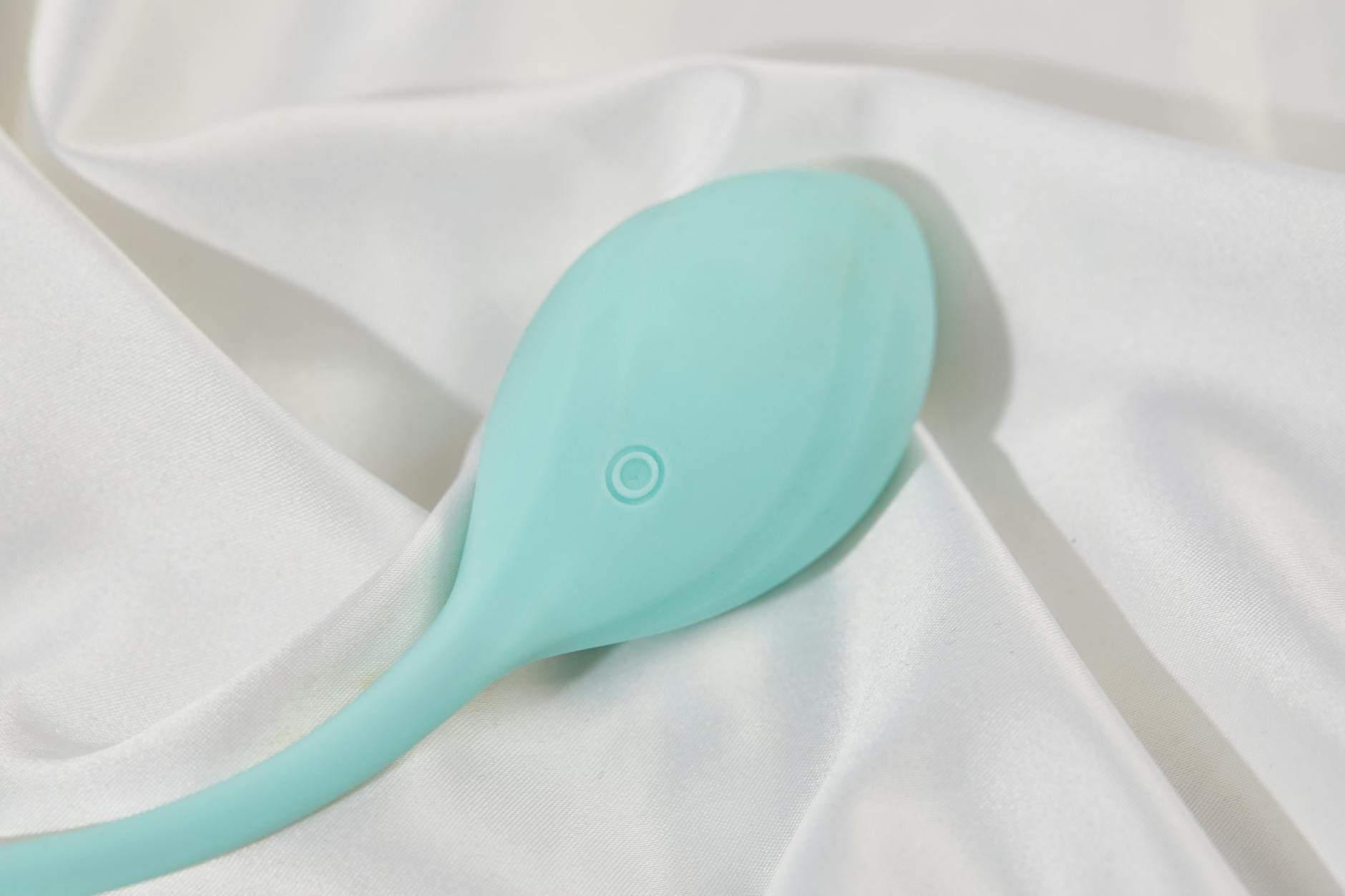
Why Lemon Vibrators Work Better When Grieving or Processing Loss
Let's be real: grief doesn't just hurt your heart. It also hijacks your body. You stop noticing sensation. Food tastes like nothing. Touch feels distant, muffled, like you're experiencing the world through thick glass. And pleasure? That feels completely off the table.
But here's what I've seen in my practice with couples and individuals navigating loss: that numbness isn't permanent, and reconnecting with your body doesn't require waiting until the grief passes. Lemon clitoral vibrators offer something specific during this time. They're not about forcing happiness or "moving on." They're about gentle reconnection, on your own terms, when you're ready.
How grief actually shuts down your nervous system
When you're processing significant loss—whether it's death, a relationship ending, a health diagnosis, or a major life change—your body goes into a protective state. Your sympathetic nervous system (the fight-or-flight response) stays activated, and your parasympathetic nervous system (the rest-and-digest response) gets suppressed.
This is protective in the immediate aftermath. Your body is conserving resources. But over weeks and months, this pattern creates genuine numbness. Sensation becomes muted. You might not feel hungry, tired, or physically present in your own life.
Many people describe it as dissociation: they're going through the motions, but nothing feels quite real. And when nothing feels real, pleasure feels impossible.
Why clitoral stimulation helps during grief
Clitoral stimulation activates your parasympathetic nervous system. It doesn't override grief or make it go away. But it creates a physiological state where your body can rest, which is often the opposite of what grief demands.
Lemon vibrators, specifically, work well during grief for three reasons.
First, they're gentle. The suction-based stimulation on clitoral vibrators doesn't require the kind of building intensity that traditional vibrators do. You're not performing pleasure or reaching for an orgasm. You're just creating sensation. That distinction matters enormously when you're numb.
Second, they're controllable. You control the intensity, the rhythm, the duration. There's no pressure to "get there" or finish. You can experience the vibration, notice what your body is feeling, and stop whenever you want. That agency is psychologically grounding when grief often feels like it's happening to you.
Third, they create a localized, focused sensation. When your nervous system is overwhelmed and dissociated, broad sensations can feel overwhelming. The targeted stimulation of a lemon clitoral vibrator is like drawing a circle of sensation in the middle of numbness. It's a way of saying: this is still here, you can still feel this.
The neuroscience of grieving bodies
Grief is not just sadness. It involves disruption across multiple brain networks. The default mode network (involved in self-referential thinking and memory) stays hyperactive. The salience network (which decides what matters) misfires constantly. And the central executive network (which handles focus and decision-making) struggles to function.
The result is that small, simple sensations become harder to access. You might not notice physical pleasure because your brain is still processing the loss. Clitoral stimulation bypasses some of this friction. It's a direct line from physical sensation to parasympathetic activation without requiring your overwhelmed cognitive systems to engage.
You're not thinking your way to pleasure. You're feeling your way back to your body.
Practical differences with lemon vibrators during grief
If you've used clitoral vibrators before grief, you might notice differences now.
Intensity tolerance drops. Patterns that felt good six months ago might feel like too much. Start on the lowest setting. Really start low. Many people in grief find that patterns 1 and 2 on a lemon clitoral vibrator are the sweet spot. You want sensation, not stimulation.
Duration shortens naturally. Five to ten minutes of gentle suction might be your window. That's not a failure. That's your body saying: I can feel this much right now. That's progress.
Orgasm might not be the goal anymore, and that's fine. Some people find that during deep grief, orgasm feels impossible or unwanted. Others find that releasing tension through orgasm actually helps. There's no right answer. A lemon vibrator works either way. You can use it for sensation alone, or for orgasm, depending on what your body needs on a given day.
Timing matters. Grief is often worse in the morning or evening. If you find a time of day when you feel slightly less numb—maybe afternoon, after a walk, after eating something—that's when to reach for the vibrator. You're working with your nervous system, not against it.
Loneliness, sensuality, and reconnection
Grief is often wrapped up in isolation. Whether you've lost someone, ended a relationship, or are processing a diagnosis alone, there's often a sense that your body belongs to the grief now, not to you.
Using a lemon clitoral vibrator is a way of saying: this is still my body. It still has sensation. I still exist as a physical being.
That might sound simple, but during grief, it's revolutionary. Touch—even self-touch—becomes an act of reclaiming yourself from the loss.
If you're grieving a relationship, you might also be grieving touch itself. A partner who's gone. Physical affection that stopped. A lemon vibrator can't replace that, but it can remind your body that sensation and pleasure are still available. That physical connection exists, even if it's self-directed now.
Many of my clients describe using a clitoral vibrator during grief as a form of self-care that feels both lonely and profoundly necessary. You're alone with your pleasure, but that aloneness is also safety. You control it completely.
How to approach it gently
If you're considering using a lemon clitoral vibrator while processing loss, here's how to do it in a way that feels supportive, not forced.
First, don't frame it as "getting over" your grief or "moving on." Frame it as reconnection. "I want to feel my body again." That's enough.
Second, choose a time and place where you feel safe. Grief is vulnerable. You might cry. You might feel nothing. You might feel a wave of sadness in the middle of pleasure. All of that is okay. You need privacy and comfort.
Third, use water-based lubricant, even if you usually don't. When you're grieving, your body may not produce natural lubrication, and that's normal. Lubricant removes friction and makes the sensation purely pleasurable, not uncomfortable.
Fourth, start slower than you think you need to. The numbness is real. Your body might need significant time just to wake up to sensation.
Fifth, let it be without pressure. If you use a lemon vibrator and feel nothing, that's still information. You tried. You created space for reconnection. That matters.
When grief and pleasure intersect
Here's something that surprised many of my clients: sometimes pleasure and grief can exist at the same time. You might have an orgasm and cry. You might feel sensual and then immediately sad. That's not a sign it's not working. That's a sign your nervous system is processing something real.
During grief, your body is learning that it can feel multiple things. That sensation and sadness can coexist. That pleasure doesn't mean you've forgotten or moved on. It just means you're still alive.
A lemon clitoral vibrator can be part of that process. Not as a fix, but as a tool for gentle reconnection.
FAQ: Lemon Vibrators and Grief
Is it normal to feel nothing when using a vibrator while grieving?
Completely normal. Numbness is part of the grief process. If you feel nothing, your body might still be protecting itself. That's okay. You're not broken. Try again in a few weeks, or just let it be. There's no timeline for reconnecting with your body.
Can using a lemon vibrator help me "get over" my loss faster?
No, and I wouldn't frame it that way. Grief takes time. A lemon clitoral vibrator won't speed that up, but it can remind you that your body is still yours, even while you're processing loss. That's a separate thing from "moving on."
What if I feel guilty using a vibrator while grieving someone?
Guilt is common. People often feel like pleasure is somehow disloyal to the person they've lost. But your body still belongs to you. Using a lemon vibrator is an act of self-care, not infidelity or forgetting. If the guilt is strong, talking to a therapist can help untangle it.
Is it okay to cry during or after using a lemon vibrator?
Absolutely. Pleasure during grief often opens the door to other emotions. Crying is processing. Your body is doing exactly what it should. Keep tissues nearby and let yourself feel whatever comes up.
How often should I use a lemon vibrator while grieving?
As often as feels good. There's no prescription. Some people find daily use grounding. Others use it once a week. Listen to what your body needs. If it feels nourishing, do it. If it feels like another obligation, pause and try again later.
Can my partner and I use a lemon vibrator together while processing a shared loss?
Yes, if you both want to. Shared grief can create distance, and gentle, non-pressured pleasure together can reconnect you. But only if you both genuinely want it. Don't use it as a way to "fix" the relationship. Use it as a gentle way to remember that you're still here, together. Check out how lemon vibrators can enhance pleasure when exploring together.
Reconnection is its own kind of healing
Grief doesn't have an expiration date. But reconnection—with your body, with sensation, with pleasure—can happen alongside it.
A lemon clitoral vibrator is just a tool. But tools matter. In the context of loss, having a gentle, controllable way to wake up your nervous system, remind yourself that you're still physical, still capable of sensation, still alive—that's valuable.
You don't have to wait until the grief is gone to use one. You can use it right now, in the middle of it all, as a small act of reclaiming your body.