
Here's what nobody tells you about the minutes after climax
You've just had an orgasm. Your lemon clitoral vibrator did exactly what it's supposed to do. And now, suddenly, touching your clitoris feels like touching a live wire. What changed?
Not your toy. Not your body breaking. Your nervous system just entered a completely different phase, and if you keep stimulating at the same intensity, you're not going to feel good. Between you and me, understanding this one thing changes everything about how you experience pleasure with a lemon vibrator.
What happens to your clitoris right after orgasm
The clitoris is packed with nerve endings. During arousal and orgasm, blood floods the area, the tissue swells, and those nerves fire in a coordinated storm. It's exquisite.
The second the orgasm finishes, that flood recedes rapidly. The tissue becomes hypersensitive because the nerves that just flooded with stimulation are now exposed without the protective layer of arousal. Your clitoris essentially becomes overactivated. Touch it at full intensity right now, and it ranges from uncomfortable to outright painful.
This isn't weakness or dysfunction. It's your nervous system doing its job. The clitoris is protecting itself by becoming exquisitely sensitive to further input.
The refractory period is real, but it's not what you think
You've probably heard about refractory period in the context of people with penises. That's the biological downtime after orgasm where another one isn't possible.
For people with vulvas, it's wildly different. The refractory period isn't a brick wall. It's a gradient. You can often orgasm again minutes after the first one. But the landscape has shifted. Your sensitivity has changed. Your capacity for stimulation has changed. Trying to ignore that and pushing the same lemon vibrator at the same settings into the same overstimulated area is like trying to read with the brightness all the way up. Yes, technically you can, but it's unpleasant.
Why your lemon sucker feels unbearable all of a sudden
Lemon clitoral vibrators, especially the suction-based ones, deliver consistent, focused stimulation. That's why they work so well for building arousal and reaching orgasm. The problem: post-orgasm, that same focused suction on an oversensitive clitoris reads as almost painful.
This isn't a design flaw. It's physics meeting biology. The same tool that brought you to climax can't be used identically in the minutes immediately after. Your nervous system needs a reset.
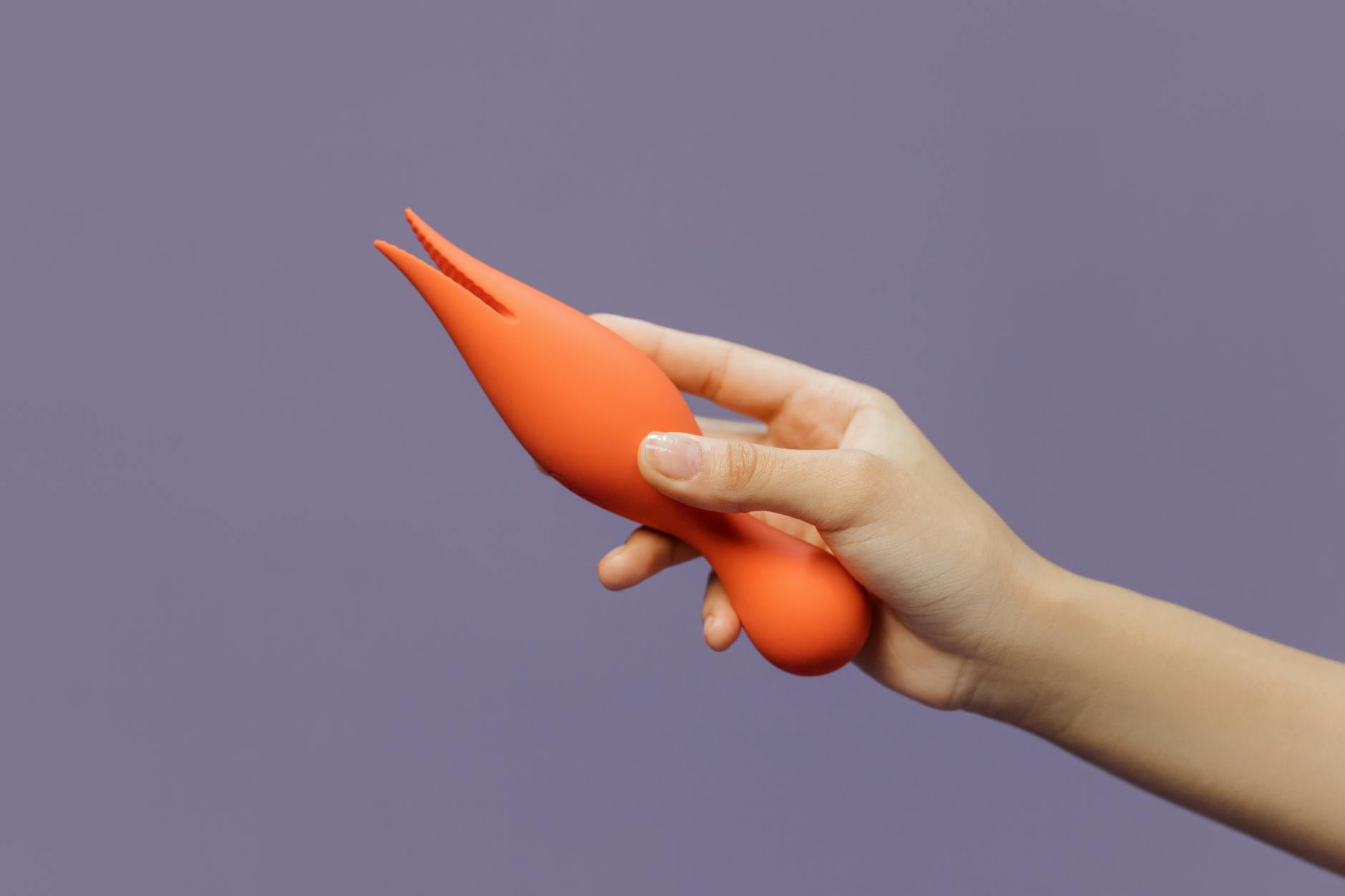
Photo by cottonbro studio on Pexels
The three things that change post-orgasm
1. Pressure threshold drops by 40-60 percent.
Scientific research on vulvar sensitivity shows that post-orgasm, the amount of touch needed to trigger discomfort or pain drops significantly. If your lemon vibrator felt perfect at setting 4 before climax, it will likely feel too intense at setting 2 immediately after. This isn't permanent. It recovers in 5-20 minutes depending on your body.
2. Pleasure switches to a different bandwidth.
During arousal, you're craving intensity. After orgasm, your nervous system is looking for soothing input. Gentle touch, broad contact (rather than pinpoint), slower movement, or a complete break feels better. Your lemon clitoral vibrator is designed for intensity. It's not the wrong tool anymore. You're just asking it to do something different than its purpose.
3. Neural fatigue sets in fast.
The nerves in your clitoris have just fired at maximum. They need recovery time. Continuing to stimulate them intensely is like asking muscles to perform another max-effort set immediately after failure. It doesn't work. It hurts.
How to actually enjoy your lemon vibrator post-orgasm
If you want to stay in pleasure after climax, here are three approaches that work.
Switch locations. Your clitoris is oversensitive. The surrounding vulva, inner thighs, and labia are not. After orgasm, turn your attention there. Broad, gentle stimulation in those zones can feel incredible and doesn't trigger the nerve-fatigue problem.
Lower the intensity dramatically. If you want to keep your lemon sucker on your clitoris, turn it down to setting 1 and move it slowly, gently. Hover rather than press. Many people find this soft, slow afterglow stimulation is actually deeply pleasurable. It's different from build-toward-orgasm stimulation. It's slower, more meditative.
Take a break entirely. This is underrated. Sometimes the best thing your nervous system needs is 10-15 minutes of no genital stimulation at all. Rest, breathe, feel the afterglow. Then, if you want another round, you're back to baseline sensitivity and can build again with full intensity.
For partner scenarios
If you're with a partner, this matters. One person having an orgasm doesn't mean the session is over or that both people are done. But it does mean the stimulation strategy needs to shift.
Communicate this. "I just came and my clitoris is really sensitive right now. I want to slow down, not speed up." Or: "I'd love to focus on another part of my body for a bit." Your partner isn't failing you by not knowing this without being told. Most people have never learned it because it's not talked about.
If your partner uses a lemon vibrator on you post-orgasm, the same rules apply. Lower intensity. Broader contact. Patience.
The role of your nervous system's arousal state
How quickly your sensitivity recovers depends partly on how aroused you are. If you have one explosive orgasm and then the session ends, full recovery takes longer because your nervous system is being asked to downshift from high arousal to resting state.
If you're in extended pleasure, with multiple rounds, your arousal state stays elevated. Your sensitivity recalibration happens faster because you're still in the zone. Many people find they can reach multiple orgasms with 5-10 minute breaks if they keep some level of arousal going. Lemon clitoral vibrators are especially good for this because you can easily pause, rest, then resume.
When post-orgasm sensitivity is a sign of something else
Some hypersensitivity after orgasm is normal. But if any of these apply, it's worth checking in with a healthcare provider.
Pain that persists beyond 20 minutes. Normal oversensitivity fades. Lasting pain suggests irritation or inflammation, possibly from friction, toy material, or an underlying condition like vulvodynia.
Sensitivity that's new or escalating. If this didn't used to happen and now it does every time, something has shifted. It could be hormonal, stress-related, a skin condition, or an issue with lube compatibility.
One side feeling dramatically different from the other. Asymmetrical hypersensitivity can point to inflammation or infection on one side. Worth mentioning to your doctor.
Numbness mixed with hypersensitivity. This is less common but worth reporting. It sometimes indicates nerve involvement.
For most people, post-orgasm hypersensitivity is just your nervous system doing its job. But if something feels off beyond the normal "too intense for right now" feeling, trust that instinct.
FAQ: Post-Orgasm Sensitivity and Lemon Vibrators
How long does post-orgasm hypersensitivity usually last?
Typically 5-20 minutes, depending on your body, arousal state, and how intense the orgasm was. Some people recover in 3 minutes. Others need 30. There's no universal timeline. Pay attention to your own body's rhythm.
Can I use my lemon vibrator immediately after orgasm if I lower the setting?
Yes, absolutely. Set 1 on most lemon suction vibrators is gentle enough for post-orgasm use. The key is moving slowly and letting the sensation be soft rather than intense. Many people find this creates a different kind of pleasure—more meditative, less urgent.
Does this post-orgasm sensitivity mean I should stop using my lemon clitoral vibrator?
No. Understanding the sensitivity shift means you can work with your vibrator more skillfully. Once you know what's happening, you can adjust your approach and stay in pleasure longer instead of hitting a wall.
Will post-orgasm hypersensitivity go away if I train myself to ignore it?
Not really. Pushing through hypersensitivity doesn't desensitize you. It just creates discomfort. Your nervous system isn't broken. It's protecting itself. The smarter move is to respect that protection and adjust your technique.
Is post-orgasm sensitivity different with lemon vibrators than with other toys?
No. The sensitivity shift happens regardless of the toy. But lemon suction vibrators deliver such focused, intense stimulation that the contrast between mid-orgasm intensity and post-orgasm sensitivity feels more dramatic than with, say, a broad wand vibrator. Understanding this helps you use your lemon vibrator more effectively.
Can multiple orgasms in one session help avoid post-orgasm sensitivity?
Sometimes. If you keep your arousal high and your stimulation continuous, your clitoris doesn't fully downshift between orgasms, so hypersensitivity is less pronounced. But you'll still experience some recalibration. Staying hydrated, using good lube, and pacing yourself prevent fatigue and pain.
The bottom line
Your body isn't broken. Your lemon vibrator isn't broken. What's happening post-orgasm is your nervous system completing its job and asking for a different input. Once you understand the shift, you can work with it instead of against it. Lower the intensity. Move slower. Switch locations. Take a break. Come back when you're ready.
Your pleasure doesn't end at orgasm. It changes shape. And that's actually where things get really interesting.