Here's the thing about desire mismatch
One person wants sex twice a week. The other wants it twice a month. Neither of you is broken. But the gap between you starts to feel like a problem, and someone usually ends up frustrated or guilty. The lower-desire partner feels pressured. The higher-desire partner feels rejected. Both of you stop enjoying anything.
What I've seen work with hundreds of couples: sometimes the answer isn't compromising on frequency. It's reclaiming pleasure for the person who's been saying no.
Why saying no shuts down your own desire
If you're constantly deflecting your partner's advances, your body learns to anticipate rejection. Your nervous system goes on high alert. You might avoid physical touch entirely because you're bracing for "the conversation." This is real neurobiology, not coldness.
Here's the twist. When desire mismatch couples start focusing on solo pleasure instead of fighting about couple frequency, both partners usually end up wanting sex more. Not because they're thinking about their partner. But because they're rebuilding trust with their own body.
The solo play reframe that changes everything
Tell your partner this: "I want to spend time reconnecting with my own pleasure. This isn't about you or us. It's about me remembering what my body actually wants." Full stop. No apologies, no explanation of why you've been less interested.
Then actually do it. Three to four times a week, 15-20 minutes alone. This isn't foreplay training. This isn't practice for partnered sex. It's genuine self-exploration with zero performance pressure.
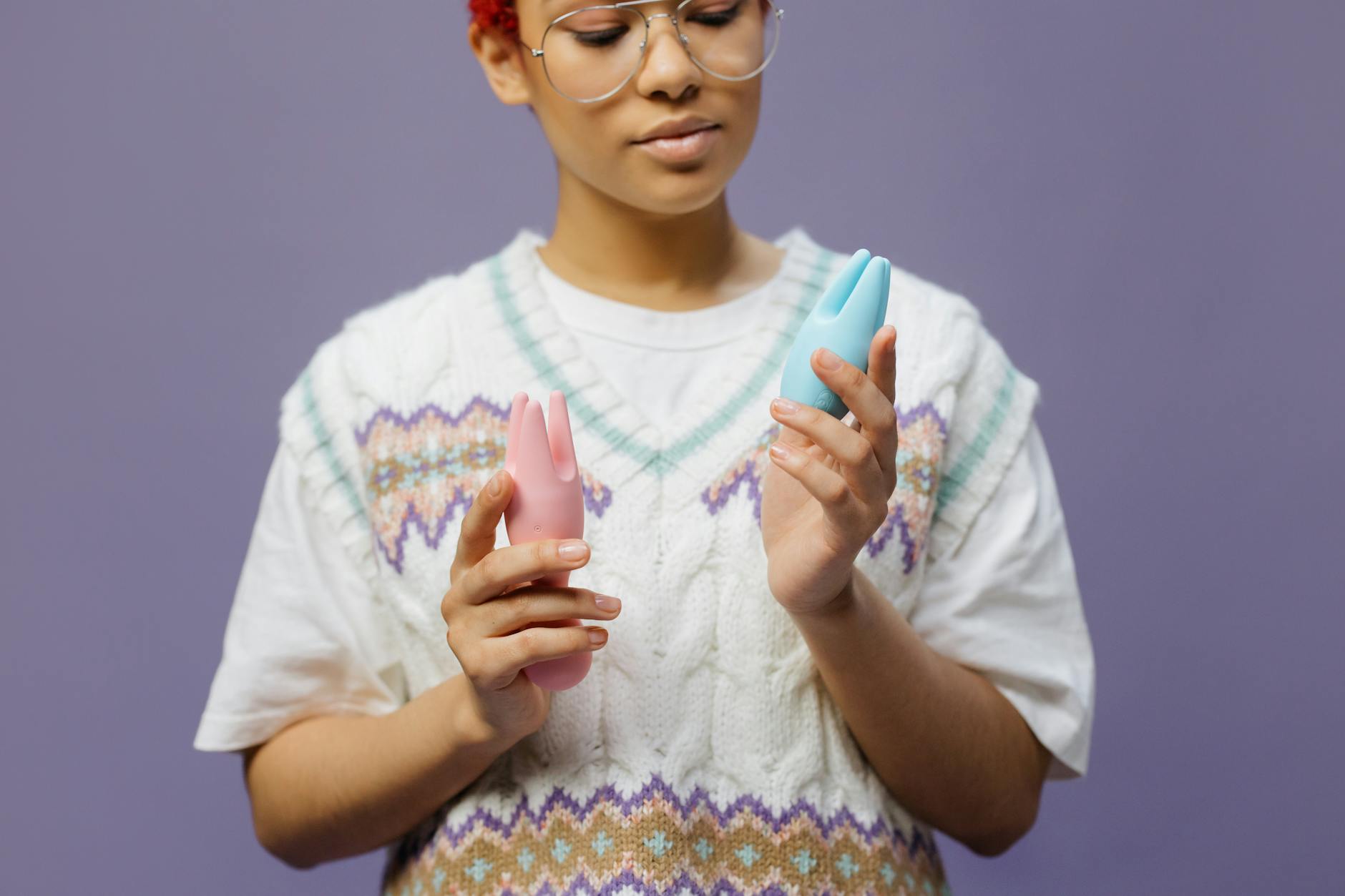
Lemon clitoral vibrators are wildly good for this because they work differently than traditional toys. The suction technology creates a sensation that feels less like pressure and more like invitation. There's a gentleness there that helps when you've been feeling touched-out or obligation-heavy.
Using suction to rebuild arousal from the ground up
If you've been saying no to your partner for months, your arousal circuitry might feel foggy. Suction toys like lemon vibrators bypass the friction-focused stimulation that sometimes feels like work. Instead, they create rhythmic pressure that your nervous system reads as pleasure without effort.
Start at the lowest setting (pattern 1 on the Lem). Many people who feel disconnected from arousal find that gentler suction actually helps them feel something again. You're not trying to orgasm on a deadline. You're listening to what your body wants when there's no one watching.
Set a timer for 20 minutes. If you come, great. If you don't, that's also the entire point. The goal is feeling your own desire return at its own pace.
What happens when you start doing this consistently
After two to three weeks of regular solo time, most people report one of these shifts: (1) they feel physically more responsive, (2) they stop feeling resentful about their partner's initiation, or (3) they actually start wanting sex again. Sometimes all three.
Why? Because you're no longer the person being asked. You become the person who has private pleasure that belongs to you. That shift in identity is huge. Your partner benefits too. They stop feeling like they're chasing someone who's running away.
One woman I worked with told me: "After four weeks of using a lemon vibrator on my own, I actually asked my partner to come be near me. Not to do anything. Just to be there. And suddenly the pressure I'd been feeling just evaporated." She went from avoiding his touch to initiating connection. The change wasn't him backing off. It was her rebuilding her own desire without the sting of obligation.
The conversation with your partner about this
Don't frame solo play as a solution to your mismatch. Frame it as self-care that will make you feel better. "I've realized I need time to connect with my own body. I'm going to spend some time on that. It's not about avoiding you. It's about taking care of myself."
If they ask what you're doing, you can tell them or not. Your privacy here matters. You need to feel free to explore without their energy in the room.
What sometimes surprises couples: when the lower-desire partner stops performing and starts genuinely exploring, the higher-desire partner often stops pushing so hard. Desperation is horny, but it's also exhausting for both people. When you pull back and focus on your own pleasure, the whole dynamic softens.
The settings that help most when you're rebuilding arousal
If you're using a lemon vibrator, spend time on patterns 1 through 3. These lower-intensity settings let your clitoris and surrounding tissues respond without overstimulation. Your goal isn't to chase intensity. It's to remember what pleasure feels like when it's quiet and private.
Many people find that once they've reclaimed solo pleasure, they actually want to share it. Not immediately. But after a few weeks, some couples find that mutually exploring a lemon clitoral vibrator during partnered time bridges the gap nicely. The toy isn't doing the work. You're doing it. Your partner is just witnessing your pleasure, which is genuinely intimate in a way that takes pressure off both of you.
When this solo work is actually separate from the mismatch conversation
Focusing on your own pleasure won't fix every desire mismatch. Some couples have deeper incompatibilities that need real conversation, boundary-setting, or sometimes therapy. But rebuilding your own arousal is the foundation. You can't negotiate a sexual relationship when you've lost touch with your own desire.
Once you're back in your body and feeling your own pleasure, the conversation with your partner shifts. Instead of "Why don't you want me," it becomes "Here's what I actually need and what you need. How do we build something that works for both of us." That's a conversation from a place of stability, not desperation.
Start with yourself. The rest gets easier from there.
People also ask
How often should I use a lemon vibrator if I'm trying to rebuild arousal?
Three to four times a week is ideal. Frequency matters less than consistency. Your nervous system learns trust through repetition. Pick a time when you know you won't be interrupted, ideally the same time most days. Your body starts to anticipate and prepare. After three weeks, most people notice a shift in how quickly arousal builds.
Will using a lemon vibrator solo affect how I feel about sex with my partner?
It often improves it. When you've rebuilt your own arousal and pleasure without obligation, sex with a partner usually feels less like a chore and more like a choice. You're not saying yes out of guilt. You're saying yes because you actually want to. That changes everything for both people.
What if my partner feels threatened by me using a lemon clitoral vibrator alone?
That's a separate conversation worth having directly. Many partners worry that solo toys mean they're not enough. Usually what helps is framing it as self-care, not a replacement. "I need time to understand my own body better. This helps me feel better overall, which helps us." If they remain upset, that might point to deeper insecurity that deserves its own work, possibly with a therapist.
Can I use a lemon vibrator with my partner if we're trying to address desire mismatch?
Yes, but usually after you've done solo work first. Once you've rebuilt your own pleasure and arousal, introducing a toy together can be intimate and fun. The lower-desire partner usually feels less pressure because the toy is doing some of the work. The higher-desire partner feels closer because they're involved in your pleasure. Just make sure you've reclaimed your own body first.
How do I know if a lemon vibrator is right for me if I've been low-desire for a long time?
The suction technology on lemon vibrators is gentler than traditional clitoral vibrators, which helps if your body has been in a protective, touch-averse state. Start at the lowest setting and listen. If it feels good, keep going. If it doesn't, that's information too. There's no wrong answer. You're learning what your body wants when there's zero pressure.
Should I tell my partner when I'm using a lemon vibrator alone?
That's your call. Some people find that telling their partner ("I'm taking some time for myself tonight") helps normalize solo play and reduces the secrecy that sometimes comes with desire mismatch. Others need total privacy to feel safe exploring. Whatever helps you feel free and unjudged is the right choice.
The real shift happens slowly
Desire mismatch doesn't resolve overnight. But reclaiming your own arousal through consistent solo exploration often breaks the tension cycle that's been keeping both of you stuck. You stop being the person avoiding touch. Your partner stops being the person chasing. You both get to want things again.
Start small. Three weeks. One lemon vibrator. Time alone. Notice what shifts.