
Let's start with what numbness actually is
You're touching yourself, or your partner is, and... nothing. Not pain. Not disgust. Just an absence. Your brain knows it's happening, your hand is there, but the sensation feels like it's coming through a thick wall of frosted glass. Between you and me, this is one of the most common things I hear about in sessions. And it's also one of the most fixable.
The numbness isn't happening because you're broken or because you've lost your capacity for pleasure. It's happening because your nervous system has learned to protect you by dampening physical input. That's a feature, not a bug. Understanding why it happened is the first step to rewiring it.
Why numbness shows up in the first place
There are usually three culprits: dissociation, habituation, or a combination of both.
Dissociation is your nervous system's way of checking out when things feel unsafe, overwhelming, or just too much. It's not always dramatic. Sometimes it's subtle. Your body is present but your awareness is somewhere else. You're watching yourself have sex instead of being inside the experience.
Habituation is different. It's what happens when you use the same stimulation in the same way, in the same context, over and over. Your nervous system stops registering it as new information. The sensation becomes background noise. This is especially common in long-term relationships where the rhythm and routine have stayed exactly the same for years.
Both can feel like numbness. And both respond to a reset.
Why lemon vibrators change the game
The key is novelty and intensity without aggression. Here's the difference between a traditional vibrator and a lemon clitoral vibrator like the ones from My Lemon Suckers.
Traditional vibrators use oscillation. They buzz back and forth at the same frequency. After a few months, your nerve endings literally stop registering that frequency as novel stimulation. Your brain goes quiet.
Lemon vibrators use air-suction technology. Instead of vibration, they create a gentle pulsing pressure that mimics oral sensation. For someone with numbness, this matters. It's a completely different signal hitting your nerve endings. Your nervous system wakes up because it's receiving input it hasn't adapted to yet.
The second piece is control. With air-suction lemon vibrators, you can start at incredibly low intensity and build from there. Pattern 1 feels like a whisper. By the time you reach patterns 5 or 6, you're in deep sensation. This gradual escalation lets your nervous system re-engage without overwhelming it.
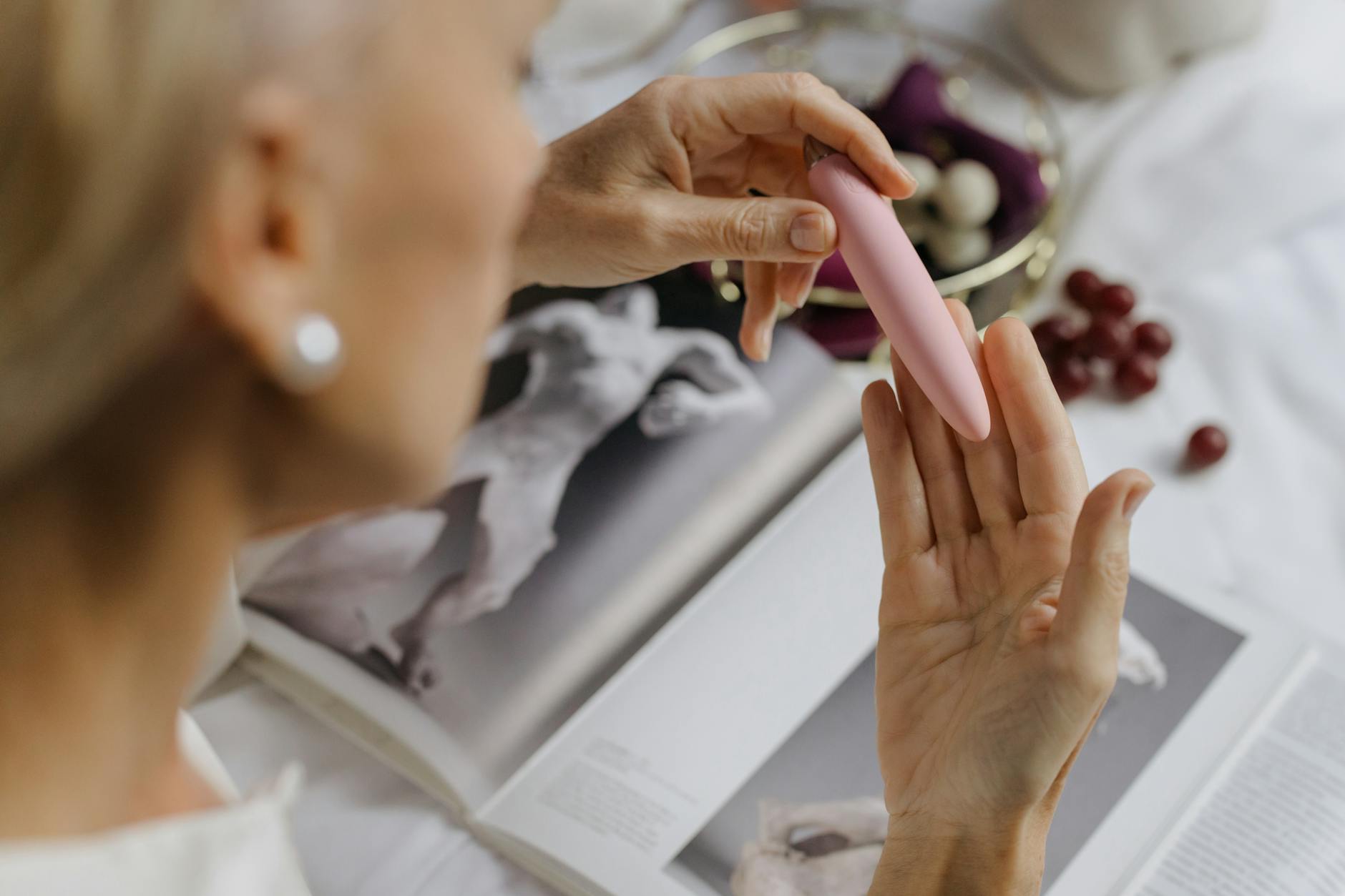
Photo by cottonbro studio on Pexels
The three-stage protocol for rewiring sensation
If you're coming back from numbness, you don't jump straight to partner sex or even to intense solo sensation. You rebuild gradually.
Stage One: Solo exploration without pressure to feel anything. This sounds counterintuitive, but the goal is not to have an orgasm. The goal is to notice sensation. Start with your lemon vibrator at the lowest setting. Place it against your inner thigh, not directly on your clitoris. Notice the feeling. Is it warm? Cool? Pulsing? Spend 10 minutes just noticing without trying to build toward anything. Do this for 3-5 days before moving to the next stage.
Stage Two: Direct clitoral stimulation, still no pressure. Now bring the lemon vibrator to your clitoris at the lowest setting. Let it sit there. Don't move it. Notice the sensation. Does it feel different here? You might feel almost nothing. That's normal. Your body is still waking up. Try different patterns. Stay with what feels interesting, even if it doesn't feel intense. Again, spend 10 minutes. Do this for a week.
Stage Three: Exploration without performance. Now you're allowed to move the vibrator, to try different patterns, to explore what actually builds sensation. The permission here is key. You're not trying to orgasm. You're not trying to prove anything. You're just exploring. When sensation starts building, follow it. If it plateaus, that's fine. Notice it. Sometimes orgasm comes. Sometimes it doesn't. Both are data.
Most people start feeling real sensation return within two weeks of consistent practice.
When dissociation is the real problem
If the numbness is tied to dissociation, the vibrator alone isn't enough. You need to bring your awareness back into your body.
Try this while using your lemon vibrator: before you turn it on, place your hand on your heart or your belly. Feel your breath. Feel the temperature of your own skin. Name five things you can see in the room. This grounds you in the present moment. Then turn on the vibrator at a low setting and keep your awareness on your body. If your mind starts to drift, notice it without judgment, and bring your attention back to the physical sensation.
This sounds simple because it is. Dissociation is partly a habit of leaving your body. You're teaching yourself the habit of staying.
Partnered play when you're rebuilding sensation
If you have a partner, the conversation matters more than the technique. Tell them: "I'm working on reconnecting with sensation. That means sometimes I might not come. Sometimes I might ask you to slow down. Sometimes I might ask for stillness instead of movement. None of that means anything is wrong. It means I'm paying attention."
Your partner can participate by using the lemon vibrator with you. They can hold it against you while you focus on sensation. They can slow down their own movement to match the vibrator's rhythm, which can help your nervous system integrate different kinds of touch at the same time.
The key is permission. You're not trying to perform pleasure for them. You're relearning pleasure for you. If your partner understands that distinction, they can be a genuine partner in the process instead of a source of pressure.
The timeline for real change
Honestly? Most people feel a noticeable shift within 3-4 weeks. Sensation starts returning. The numbness thins out. By 6-8 weeks, if you're consistent, you're usually back to baseline. And many people find that the deliberate rebuilding process actually expands their sensation beyond where it was before, because they've learned to notice more granular pleasure.
That said, if the numbness has been severe and long-lasting, and especially if there's trauma in the background, this might take longer and might benefit from professional support. There's no shame in working with a therapist alongside the physical rebuilding.
Common mistakes that slow the process
One: jumping straight to high intensity. Your nervous system needs to wake up gradually. Starting at pattern 5 or 6 on a lemon vibrator often backfires because it's overstimulation, not reawakening.
Two: expecting orgasm as the measure of success. Orgasm is one form of sensation. Pleasure is bigger than that. If you're tracking progress only by whether you come, you'll miss the actual return of sensation.
Three: inconsistency. Three days of exploration followed by two weeks of nothing doesn't work. You're retraining your nervous system. That requires consistency. Even 10 minutes a few times a week beats sporadic intense sessions.
Four: not addressing the underlying cause. If dissociation is happening because your relationship isn't safe, or because you're in a depressive episode, the vibrator becomes a band-aid. The real work is creating safety or treating the depression. The vibrator is the tool that helps you rebuild once the environment is right.
Questions people ask about numbness and vibrators
Can numbness come back after I've restored sensation?
Yes, if the underlying conditions return. If you go back to routine, mechanical partner sex after six months of deliberate rebuilding, sensation can start flattening again. But now you know what to do. You can catch it and reset faster.
Is numbness permanent?
No. I've never seen a case of true permanent numbness in someone with intact nerve endings. The nervous system is plastic. It learns to go numb, and it can learn to wake up again.
Should I tell my partner I'm experiencing numbness?
Yes. But frame it as information, not criticism. "I'm noticing my sensation has flattened, and I want to rebuild it. Here's what I'm going to try." Partners who care about you will want to support this.
Does a lemon vibrator work better than other vibrators for numbness?
For many people, yes. Because air-suction technology is novel compared to oscillation, it often wakes up a numb nervous system more effectively. But novelty is individual. Some people respond better to a wand. Some respond to a different shape or material. The lemon vibrator is a genuinely effective starting point.
How long should I use a lemon vibrator each session?
Start with 10-15 minutes. As sensation returns and you become more engaged, sessions might naturally extend to 20-30 minutes. But you're not aiming for a specific duration. You're aiming for genuine presence.
Is the numbness happening because I don't love my partner anymore?
Maybe. But probably not. Numbness is a nervous system response, not a relationship diagnosis. That said, if the numbness started around the same time the relationship shifted into disconnection, that's real information. You might need both nervous system rewiring and relationship repair.
The actual path forward
Here's what I want you to know: numbness is feedback. Your nervous system is telling you something needs to change. That might be about how you're touching yourself, or what kind of stimulation you're using, or the emotional safety in your relationship, or all of it. A lemon clitoral vibrator is a precision tool that can help you wake up the physical part. But waking up the physical part only works if you're also creating space for the rest to shift.
Start with stage one. Notice what you notice. Let your nervous system learn that it's safe to feel again. Most people find their way back. You will too.