
Here's the thing about antidepressants and sex
Your medication is working. Your mood is better. You can get out of bed, think clearly, feel less trapped. And somehow your body has gone quiet. That's not a failure of the medication. It's a known and wildly underreported side effect that affects somewhere between 40 and 60 percent of people taking SSRIs, SNRIs, or tricyclic antidepressants.
The numbness you're experiencing is real. It's also fixable.
What antidepressants actually do to sensation
Most modern antidepressants work by increasing serotonin availability in your brain. Serotonin is brilliant for mood regulation. It's terrible for sexual arousal. Here's why: arousal depends on a delicate balance of serotonin, dopamine, and norepinephrine. When one goes up, the others often take a hit. Your brain is getting what it needs to function. Your genitals are getting less of what they need to respond.
But here's what matters: this isn't a neural block. Your clitoris still has nerve endings. Your capacity for orgasm is still there. What's changed is the ease of access to that capacity. You need more direct, more sustained, more concentrated stimulation to reach the same place you used to get to with half the effort.
That gap is where lemon clitoral vibrators actually shine.
Why traditional vibrators often don't help
Most vibrators rely on speed or buzz to create sensation. They work great when your nervous system is already responsive. When you're numbed by antidepressants, they often feel like white noise. You get the motion, but no actual arousal chain reaction. You finish using it, put it away, and think, "Well, that didn't work."
Lemon vibrators work on a completely different principle: suction and pulse rather than vibration alone. This matters because suction engages the clitoral complex more broadly, creating sensations that bypass some of the neural pathways that antidepressants are dampening. It's not magic. It's biomechanics.
How suction stimulation reaches deeper than buzz
When you use a traditional vibrator, you're asking numbed nerve endings to register high-frequency oscillation. When you use a lemon clitoral vibrator with a suction mechanism, you're creating rhythmic pressure changes that stimulate not just the visible clitoris but the internal clitoral network.
Your clitoris isn't just the small bump you can see. It's a whole structure with legs and bulbs and thousands of nerve fibers. Suction reaches more of that structure. Combine that with the pulsing patterns available on most lemon vibrators, and you get multiple layers of stimulation happening simultaneously. That redundancy matters when your baseline sensitivity is lower.
Most people with antidepressant-related numbness report that suction-based toys feel more effective than traditional buzzers within the first few sessions.
The timing and patience piece
Here's something nobody tells you: antidepressant-related sexual numbness often gets better over time, but "time" isn't passive. You have to actually use your body, explore it, and create new neural pathways around pleasure while you're taking the medication.
If you stop touching yourself because nothing works, nothing will work. If you start using a tool specifically designed to compensate for that numbness, your body remembers what responsiveness feels like, even in altered chemistry.
Start with one of the lower intensity settings on a lemon vibrator. Give yourself 20 to 30 minutes without a goal. That's longer than you probably used to need, and that's completely normal. Let your mind wander. Notice small sensations that feel different or interesting. Over weeks, the threshold usually lowers.
Talking to your doctor about it
First: your antidepressant is not your enemy. It's keeping you alive or functional or present in ways that matter. Before switching medications or adjusting doses, understand your options.
Talk to your prescriber specifically about sexual side effects. Say the words. "I'm experiencing numbness and difficulty with arousal." Don't say "side effects." Be specific. Then ask about three possibilities:
- Dose adjustment. Sometimes lowering the dose slightly helps without losing efficacy for mood.
- Timing. Taking the medication at a different time of day can shift when peak numbness occurs.
- Augmentation. Some doctors add a small dose of a different medication to counteract sexual side effects.
Don't wait months hoping it resolves on its own. Sexual function matters. It's not frivolous. It's part of your overall health.
Why a lemon vibrator specifically
If you're exploring tools while on antidepressants, a lemon clitoral vibrator is worth trying because it combines several features that work well with medication-induced numbness:
The suction mechanism creates sensation through pressure change, not just vibration. This can feel more intense and noticeable when traditional vibration feels muted. Multiple pulse patterns give you options to experiment with what actually registers. The compact design means more precise stimulation of the clitoral area. Most lemon vibrators have a ramp-up function, letting you start gentle and build gradually rather than jumping to full intensity.
None of this replaces good communication with your doctor. But it's a tool that works with your body's current reality, not against it.
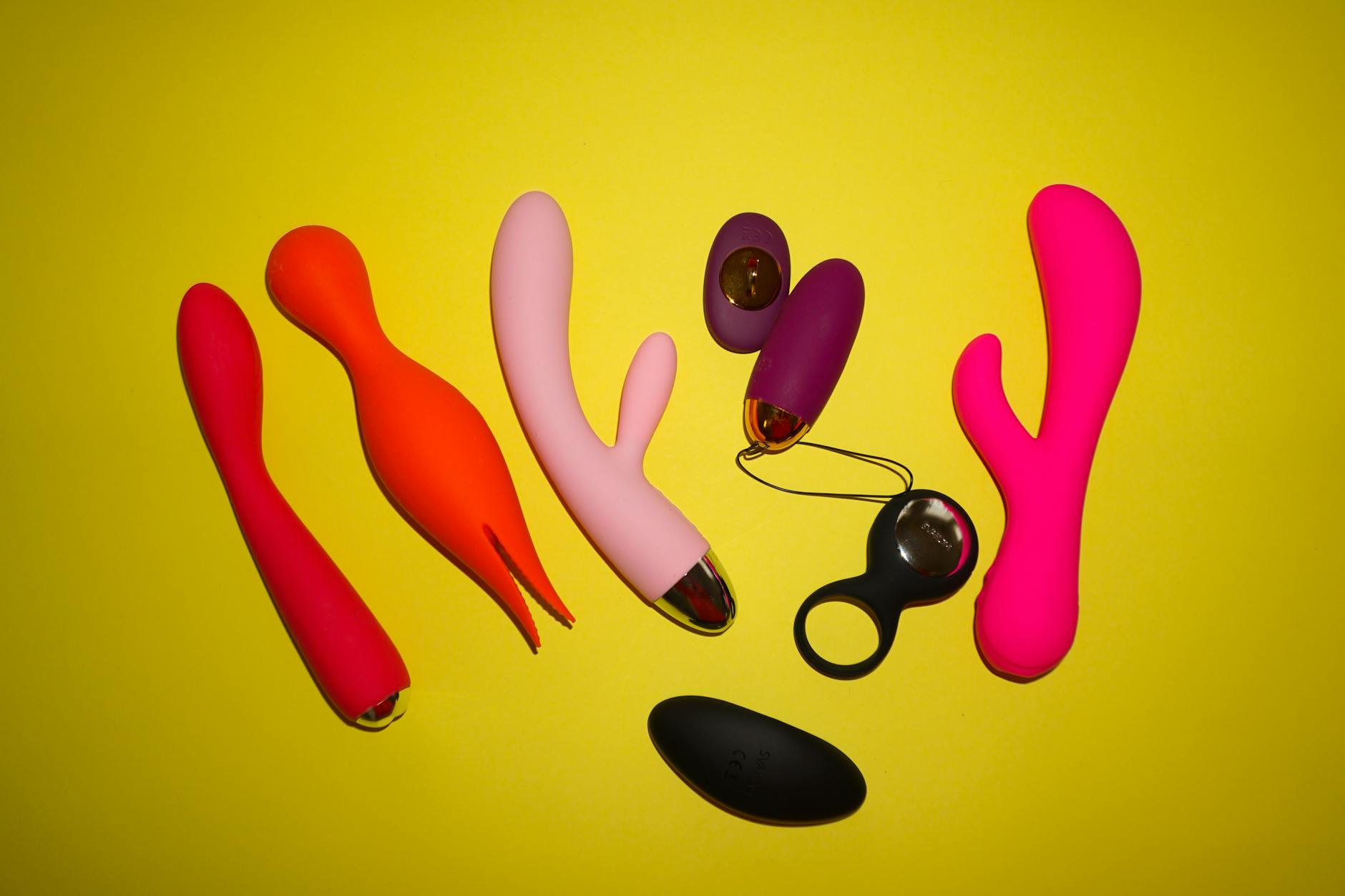
Photo by DRT.fm on Pexels
The psychological piece matters too
Antidepressant-related sexual numbness carries its own emotional weight. You spent years or decades with your body responding in predictable ways. Now you're grieving that, even though your mind is finally better. That grief is valid.
Some people feel shame about needing a tool to access pleasure. Some feel broken because their body isn't "cooperating." Here's the truth: your body is responding exactly as expected given the neurochemistry you're working with. Using a lemon vibrator isn't a workaround. It's you meeting your body where it actually is, not where you wish it would be.
If you're in a relationship, this is worth discussing with your partner. Not as "something's wrong with me" but as "my body's responsiveness has changed and here's what helps." That honesty often brings partners closer, not further away.
When to expect improvement
Some people feel a shift within a week or two of regular exploration with a lemon vibrator. Others take six to eight weeks. A few find that their responsiveness stays baseline-different even with tools, and that's also okay. You're not aiming for exactly what you had before. You're aiming for sustainable pleasure within your current life.
The key is consistency without pressure. Use the vibrator because you're curious or because it feels good, not because you're testing whether you're "fixed." That shift in mindset alone often helps.
Practical setup for success
Give yourself real time and space. Twenty minutes of interrupted attention with a lemon vibrator will likely work better than an hour of distracted attempts. Privacy matters. Being able to relax into the experience without monitoring the door or listening for footsteps matters.
Lubricant helps, even if you're producing wetness. It improves the seal on suction toys and makes everything feel less effortful. Use water-based lube if your vibrator is silicone.
Start with intensity level two or three, not one. Often the lowest setting on a lemon vibrator is too subtle to register when you're numbed. You're not trying to be gentle with yourself in a healing way. You're trying to create enough stimulus to actually feel something.
FAQ: Common questions about antidepressants, numbness, and pleasure
Will switching antidepressants help with sexual side effects?
Sometimes. Different medications affect sexual function differently. Some people switch from an SSRI to a medication like bupropion or vilazodone that has fewer sexual side effects. But switching carries its own timeline and adjustment period. Talk to your prescriber about the risk-benefit analysis before making changes.
How long does antidepressant-related numbness usually last?
It varies wildly. Some people experience improvement within weeks, especially if dose or timing changes. Others find it's a persistent baseline change while on the medication. That doesn't mean you can't access pleasure. It means the path gets different, not dead.
Can you use a lemon vibrator if you have numbing from antidepressants?
Yes, absolutely. Lemon clitoral vibrators are specifically helpful because they don't rely entirely on nerve sensitivity. The suction mechanism creates physical sensation through pressure, not just vibration. Many people find them more effective than traditional vibrators when dealing with medication-related numbness.
Does the numbness ever fully reverse?
Often, but not always. If you stay on the same medication at the same dose, the numbness often stays. If you switch medications or adjust doses, responsiveness sometimes returns. If you stay on a medication that works for your mental health, you learn to work with the new normal. That last option is actually the most common.
Should I stop taking my antidepressant because of sexual side effects?
No. Do not stop without talking to your doctor. Stopping antidepressants abruptly can cause serious withdrawal symptoms and a rapid return of depression or anxiety. Instead, talk to your prescriber about the side effects you're experiencing and explore the options available. Your mental health is not less important than your sexual function. The goal is to find a solution that honors both.
What if the lemon vibrator doesn't help?
Then you know that tool isn't right for you. That doesn't mean you're broken or that nothing will help. Try different approaches: exploring sensation in other ways, adjusting your medication with your doctor's help, working with a therapist on the psychological side of the numbness. Pleasure is individual. What works for someone else might not work for you, and that's information, not failure.
Your body is still capable of feeling good, even right now. Sometimes accessing that takes patience, exploration, and the right tools. That's not settling. It's adapting. It's choosing to stay connected to yourself even when the path looks different than it used to.
If you're struggling with the intersection of medication and sexuality, talking to someone trained in this specific area can help. Your doctor, a sex-positive therapist, or a relationship counselor can all offer perspective tailored to your actual situation. Reach out at /contact if you want guidance finding the right support.