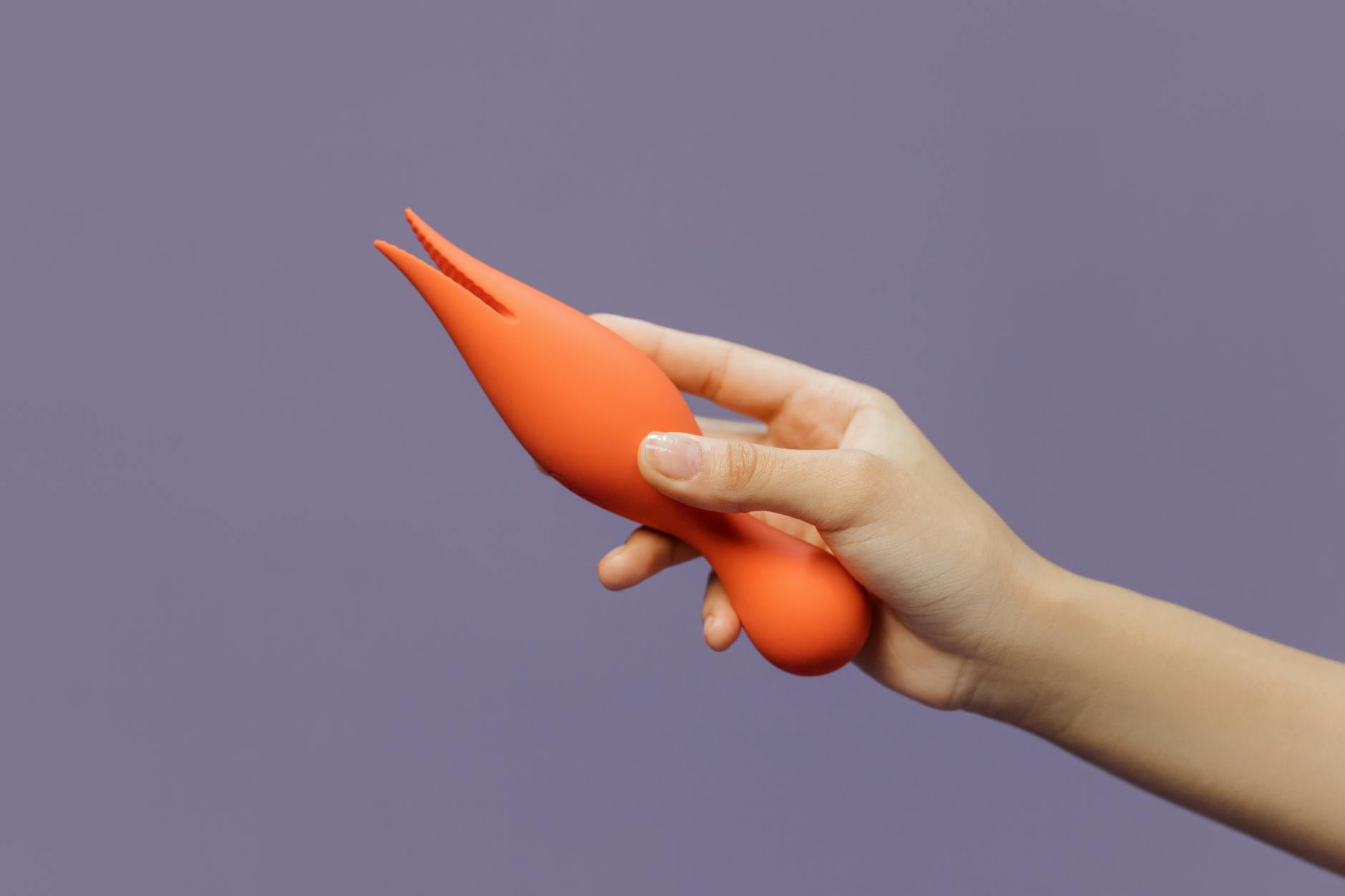
When pain becomes a barrier
Let's be real: painful sex doesn't just hurt in the moment. It rewires your brain's relationship with pleasure and touch. Your nervous system learns to brace for pain instead of open for sensation. The anxiety shows up before anything even happens. Your body tenses. Your mind checks out.
That's not a character flaw. That's a protective mechanism that made sense when touch was dangerous.
How your nervous system gets stuck
Pain during sex creates what clinicians call "pain catastrophizing." Your brain logs the memory of pain and starts predicting it before it arrives. The anticipation itself becomes painful. You might avoid your partner, avoid self-touch, avoid anything that reminds you of vulnerability.
Over time, this avoidance becomes the dominant pattern. Even after the original pain source is treated or resolved, your body remembers. Your nervous system is still in protection mode.
The good news: nervous systems are plastic. They can learn new patterns. And rebuilding pleasure often requires going slowly, in a context where you feel entirely in control.
Why lemon clitoral vibrators are particularly useful here
Three reasons lemon vibrators work better than traditional toys for nervous system recovery:
Suction doesn't feel like penetration. The air-pulse technology creates a completely different sensation from friction or pressure. For people rebuilding trust in touch, this distinction matters. Your nervous system isn't triggering old pain memories because the sensation itself is unfamiliar in a good way.
You control the intensity from the start. Lemon vibrators begin on the gentlest setting. You're not negotiating with a partner or managing someone else's pace. Just you, your body, your timeline. That autonomy is healing by itself.
Suction is forgiving to touch-avoidant tissue. After painful sex, the pelvic floor often becomes hypertonic—permanently tensed in protection. Traditional vibrators require direct contact with already-sensitive tissue. Lemon suction toys distribute stimulation more gently across a wider area, so sensation reaches your nervous system without triggering the pain reflex.
The nervous system rebuilding plan
Here's how I guide clients through this with lemon clitoral vibrators:
Week one: sensation without expectation. Use your lemon vibrator for five to ten minutes in a completely non-sexual context. Bath time. Before bed when you're relaxed. The goal is zero orgasm pressure. You're teaching your nervous system that touch can feel good without leading anywhere. Start on pattern one or two. Your job is noticing sensation, not chasing outcome.
Week two: introduce gentle exploration. Still five to ten minutes. This time, you can notice where sensation feels good versus neutral versus weird. Move the vibrator around. Experiment. But the moment you feel tension or anxiety, pause. This isn't pushing through. It's listening.
Week three and beyond: slow expansion. If the first two weeks felt good, extend to ten to fifteen minutes. You might start to notice arousal building. You might not. Both are correct. The nervous system heals on its own timeline.
The whole point is that you're steering. You're safe. You decide when to stop, when to continue, when to try something new.
When to involve a partner
If you have a partner, they need to understand what's happening in your nervous system. "I need to rebuild my own pleasure first" is a complete sentence. It's not rejection. It's actually the most loving thing you can do for the relationship because you're addressing the real problem instead of asking your partner to force pleasure when your body is in protection mode.
Once you've rebuilt solo pleasure, partner involvement happens slowly too. Your partner can be in the room, but not leading. You're still in control of the lemon vibrator. They're witnessing your reclamation of your own body. That's the work.
Managing the shame that often shows up
Most people who've experienced painful sex also develop shame around it. Either they blame themselves ("My body is broken") or they blame their partner ("They hurt me") or they internalize the fear ("Sex will always hurt"). Rarely do they hold the clear-eyed truth: I experienced pain, my nervous system protected me, and now I'm retraining it.
Using a lemon vibrator alone, on your own terms, is a direct contradiction to the shame narrative. You're not broken. You're healing. You're not dependent on a partner to validate your pleasure. You're rebuilding it yourself.
That reframe matters more than the specific toy. But the tool helps. Lemon clitoral vibrators feel sophisticated and intentional. They feel like self-care, not like medical recovery.
The physical shifts you might notice
As your nervous system calms down, you'll likely notice:
Natural lubrication returning. When you're in protection mode, your body literally cannot produce lubrication. As that changes, you'll see it shift.
Pelvic floor relaxation. The tension you've been holding for months or years starts to release. This might feel like subtle soreness at first, which is normal. You're asking muscles to unclench after a long time gripping.
Orgasms feeling different. They might be weaker at first. They might feel more localized. They might take longer to build. All of that is your nervous system recalibrating. Let it happen without judgment.
Desire reappearing, sometimes unexpectedly. You might not feel it coming. One day you'll just notice you're curious about touch again. Don't wait for desire to show up fully before you start using your lemon vibrator. Start first, and desire often follows.
When you need professional support
If pain was caused by a medical condition, make sure that's treated. Endometriosis, vaginismus, provoked vulvodynia—these all need clinical attention. A lemon vibrator is not a replacement for medical care. It's what you do alongside treatment, to rebuild pleasure while the physical piece is being addressed.
If the pain was relational—if a partner hurt you or ignored your consent—that's different work. You might need a therapist to process that betrayal before your nervous system can fully relax into pleasure again. That's not a weakness. That's wisdom. Pleasure requires safety, and sometimes safety requires processing what made you unsafe.
The long view
Rebuild pleasure after painful sex takes weeks, sometimes months. There's no fast-forward button. But there's also no point at which you've "failed" if it takes longer than you expected. Your nervous system is learning to trust your body again. That's profound work.
A lemon clitoral vibrator—gentle, controlled, entirely yours—is a practical tool for that reclamation. It says: my pleasure matters. My comfort matters. My body's signals matter. And I'm willing to listen to myself.
Common questions about rebuilding after painful sex
Will using a vibrator alone make it hard to enjoy partnered sex again?
No. In fact, the opposite often happens. When you've rebuilt your own pleasure, you know what you like and what your body needs. You can communicate that to a partner. You're not dependent on them to fix you or to validate your pleasure. That actually makes partnered sex better because it's built on your own foundation instead of desperation for it to work.
How long before I can have sex with my partner again?
There's no timeline. Some people feel ready after a few weeks of solo pleasure rebuilding. Others need months. The marker isn't time, it's whether the anxiety shows up before touch happens. If you're still bracing for pain before anything physical occurs, you're not ready. And that's information, not failure.
Can lemon vibrators cause more pain if I use them wrong?
Unless you have an active medical condition causing pain, lemon vibrators are designed for gentleness. Start on the lowest setting. Stop if you feel tension. Listen to your body. The whole point is that your nervous system gets to stay in control. If something hurts, you stop immediately. No pushing through.
What if I don't feel anything at first?
That's common. After pain, numbness or dissociation often shows up as a protective response. Your nervous system has gotten good at checking out. That changes over time as you practice presence. Use your lemon vibrator in a relaxed setting. Pay attention to small sensations. Notice temperature, texture, pressure. Sensation builds back.
Should I tell my partner I'm using a vibrator to rebuild?
That depends on the trust and communication in your relationship. Some people benefit from their partner understanding what they're doing and why. Others prefer privacy while they do this solo work. There's no rule. Do what feels safest and most honest to you.
Is it normal to feel emotional while rebuilding pleasure?
Very normal. You're processing grief about what painful sex took from you. You're also reclaiming something. Emotions show up. You might feel angry, sad, relieved, or all three in one session. That's part of the healing. Let it happen.