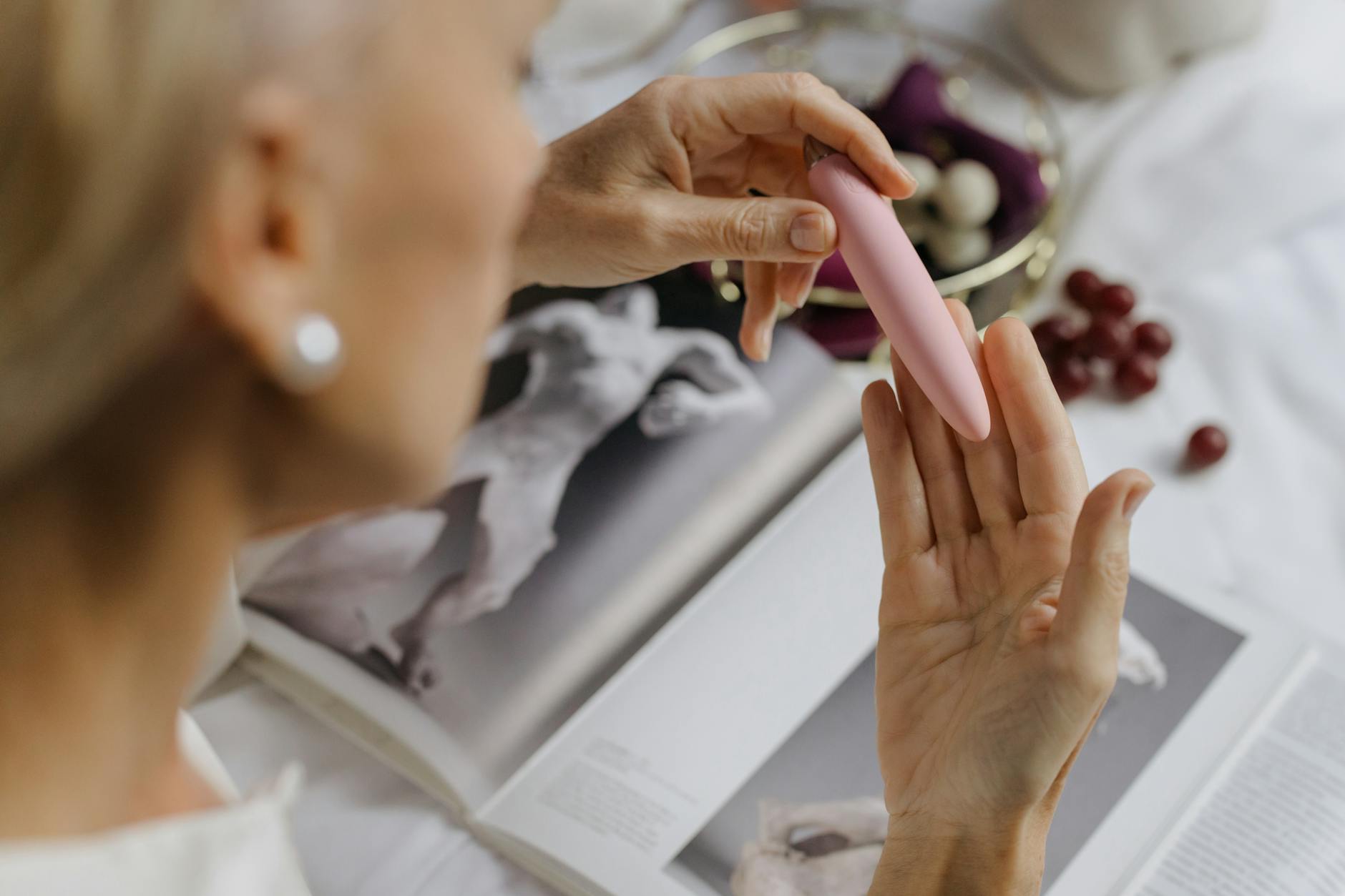
Let's talk about what happens when sensation goes quiet
Numbness isn't a conversation starters, but it's way more common than people admit. Diabetes, chemotherapy, multiple sclerosis, spinal cord injury, long COVID, or even certain blood pressure medications can dull sensation everywhere. Including where you most want to feel something.
Here's what I hear from clients: "I still want to feel pleasure, but my body isn't cooperating." That gap between desire and sensation is real, and it's frustrating. But it's not a dead end.
Why standard vibrators stop working
Most vibrators use direct vibration. Buzz buzz buzz. When your nerve endings are already struggling to register input, you end up turning the intensity all the way up, chasing a signal that might not be there. That's exhausting, and it often leads to giving up.
The problem with high-intensity vibration is that it can actually fatigue your remaining sensation faster. You're asking your nervous system to work harder and harder to register the same stimulus. Eventually people just stop trying.
Lemon clitoral vibrators from My Lemon Suckers work differently. They use suction and pulse rather than pure buzz. That distinction matters enormously for reduced sensation.
How suction reaches sensation that's asleep
When nerve endings are numb, the skin itself isn't always the problem. The nerves are there. They're just not firing consistently or strongly.
Suction stimulates differently than vibration. Instead of asking the surface nerves to detect high-frequency movement, suction creates a gentler, more sustained pressure change. It's like the difference between a light tap and a gentle squeeze.
For people with reduced sensation, this means you're engaging deeper nerve pathways that might still be working even when surface sensation feels gone. You're also getting stimulation in waves rather than constant buzz, which gives your nervous system time to register each sensation before the next one arrives.
Many of my clients report that suction actually feels like the first thing that's broken through the numbness in months or years.
Building sensation back in stages
If you're recovering sensation or working with persistent numbness, here's the framework I recommend:
Stage one: Exploration without pressure. Use the lemon vibrator on the lowest setting, no suction, just to get reacquainted with sensation. This isn't about achieving anything. It's about noticing what you can feel.
Stage two: Introduce gentle suction. Move to pattern one or two on a lem vibrator. Keep sessions short, maybe five to ten minutes. Your nervous system is learning to register input again, and you don't want to overwhelm it.
Stage three: Extend and intensify gradually. After a few sessions of stage two, you might notice the sensation becoming more vivid. That's your nerves waking up. Now you can spend more time on it and slowly experiment with higher patterns.
Stage four: Find your window. Eventually you'll discover what level and pattern actually creates pleasure rather than just sensation. That window is different for everyone with nerve damage.
The entire process can take weeks or months. Don't rush it. Each session where you notice even a tiny bit more sensation is a win.
The role of mental anticipation
Here's something that caught me off guard early in my practice: the brain is a huge part of sensation recovery. When you've spent months or years not feeling, you often stop expecting to feel. That expectation dampens the whole experience.
Using a lemon clitoral vibrator specifically gives you something to anticipate. The suction pattern is distinct and recognizable. Each session, you're priming your nervous system to expect input in a particular way.
Over time, anticipation starts doing some of the heavy lifting. Your brain begins preparing for sensation before it arrives. And that preparation actually makes the sensation register more vividly.
This is why I tell people to create a tiny ritual around it. Same time of day, same private space, same tool. Your nervous system loves predictability, especially when it's recovering.
Working with partners during sensation recovery
If you're in a relationship, numbness can feel isolating. Your partner might wonder if they're still attractive. You might worry you'll never enjoy intimacy the way you used to.
Lemon vibrators actually solve a communication problem here. Instead of "I can't feel anything," the conversation becomes "I feel something different with this tool." That's active and forward-moving.
I recommend exploring alone first. Get familiar with what the suction feels like and where on your body it creates the most response. Then, if you want to, invite your partner to be present while you use it. Not necessarily for partnered sex, but just so they understand what sensation recovery looks like for you.
Your pleasure is personal right now. It doesn't have to be shared to matter.
When to expect improvement
This depends on what caused the numbness. If it's medication-related and you're working with your doctor to adjust it, sensation can sometimes return within weeks of the change. If it's neuropathy or nerve damage, improvement tends to be slower and more gradual.
The important thing is noticing the tiny shifts. After four weeks with a lem vibrator, you might realize you felt something you didn't feel last month. That's the nervous system remapping. Keep going.
If nothing shifts after eight weeks of consistent, patient use, talk to a specialist. Chronic neuropathy sometimes needs additional support like physical therapy or nerve-focused treatment. A lemon vibrator works best alongside medical care, not instead of it.
What sensation recovery actually feels like
Clients often describe it as a slow brightening. Not a flip of a switch, but a gradual turning up of the dimmer. First it's "I think I felt something." Then "I definitely felt that." Then "I want to feel that again."
That last one is the turning point. When desire comes back, you know sensation recovery is real.
Pleasure doesn't always feel the same as it did before the numbness. It might be more concentrated, less widespread, slower to build. That's okay. Different isn't worse. It's just different.
Many people tell me that regaining sensation, even if it's altered, feels like getting a part of themselves back. And that alone is worth the patience it takes.
FAQ: Sensation Recovery and Lemon Vibrators
Can a lemon vibrator help if I have permanent nerve damage?
Yes, but with realistic expectations. Permanent nerve damage doesn't always mean zero sensation. Most people retain some nerve function, and suction-based stimulation often reaches pathways that traditional vibration misses. The goal isn't always to restore sensation to what it was. It's to find whatever sensation exists and amplify it into pleasure. That's possible even with significant nerve damage.
How is suction different from vibration for numb areas?
Vibration is rapid back-and-forth movement. It works well for people with normal nerve sensitivity. Suction is a pressure wave that gently pulls and releases, creating stimulation in layers. For reduced sensation, suction often feels more noticeable because it engages larger areas and creates a more sustained signal. Your nervous system doesn't have to work as hard to detect it.
Should I use numbing cream before trying a lemon vibrator?
No. Numbing cream defeats the purpose of sensation recovery. You're trying to wake up sensation, not put it to sleep. If sensation is painful, that's different and worth discussing with a doctor. But if it's just dull or absent, you want to work toward feeling more, not less.
Can lemon vibrators help with chemotherapy-related numbness?
Many people do find them helpful, yes. Chemo-related neuropathy is one of the most common causes of persistent numbness, and the gradual, layered stimulation from a lemon vibrator often feels more accessible than traditional vibrators. Start slow, though. Chemo can also leave nerves hypersensitive in unpredictable ways. Listen to your body and adjust patterns accordingly.
How long does sensation recovery usually take?
It varies wildly. Medication-related numbness can improve in weeks once the medication changes. Neuropathy or nerve damage can take months or longer. The key is consistency and patience. Use the vibrator regularly, notice tiny shifts, and resist the urge to rush it. Your nervous system heals on its own timeline.
What if I feel pain instead of pleasure?
Pain is a signal to stop and check in with a doctor. Sometimes numbness and hypersensitivity exist in the same body. You might be numb in one area and overly sensitive in another. That's worth understanding before you continue. A physical therapist or neurologist can help you map out where sensation is actually reduced versus where it's heightened.
Sensation recovery isn't quick, and it's not always perfect. But it's possible. Your body is more resilient than numbness makes it feel. The right tool, patience, and consistent gentle exploration can wake up sensation you thought was gone for good. That's worth the time it takes.